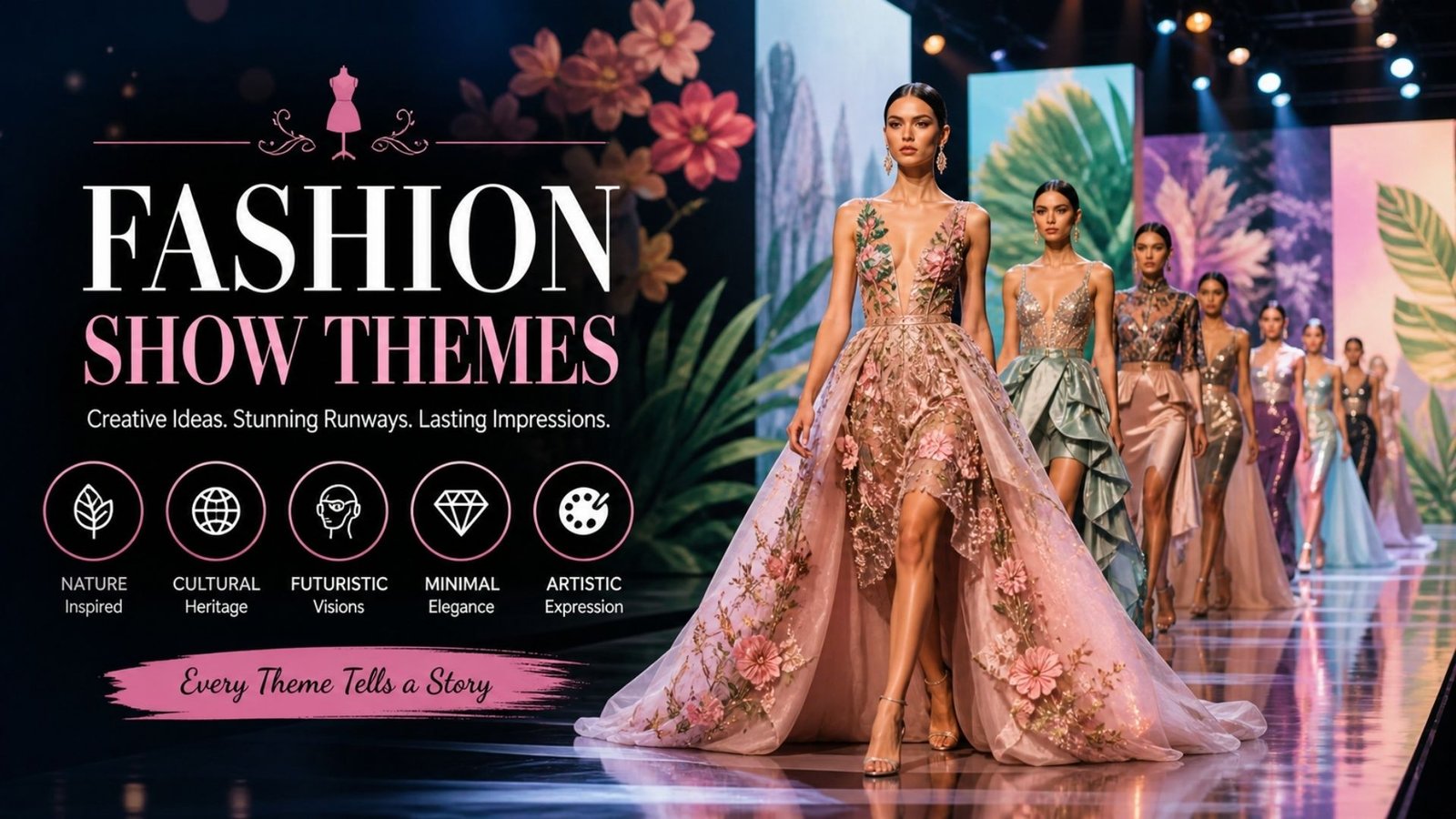
Fashion show themes are the central ideas that shape the entire look and feel of a runway event. They guide everything—from clothing design and styling to music, lighting, and stage presentation. Instead of showcasing random outfits, a theme helps create a story that connects all elements together.
In today’s fashion world, themes are more important than ever. Designers and brands use them to express identity, communicate messages, and create memorable experiences for the audience. A well-planned theme can turn a simple fashion show into a powerful visual journey that people remember long after the event ends.
Understanding the Role of Fashion Show Themes
A fashion show theme acts as the backbone of the entire event. It gives direction to designers, stylists, and production teams, ensuring that every detail aligns with a shared vision. Without a theme, a fashion show can feel disorganized or lacking purpose.
Themes also help tell a story. Whether it’s inspired by nature, culture, or futuristic ideas, a clear concept allows the audience to understand the message behind the collection. This storytelling aspect is what separates an ordinary runway show from a meaningful and engaging experience.
In addition, themes enhance audience connection. When viewers can relate to or feel inspired by a theme, they are more likely to remember the show and the brand behind it.
Key Elements That Define a Successful Fashion Show Theme
A strong fashion show theme is built on consistency and attention to detail. Every visual and sensory element should support the central idea.
Visual aesthetics play a major role. Colors, textures, and overall styling must align with the theme to create a cohesive look. For example, a nature-inspired theme might include earthy tones and organic fabrics.
Lighting and music are equally important. The right lighting can highlight the mood, while music sets the pace and emotional tone of the show. Together, they create an immersive environment.
Model presentation also contributes to the theme. Their walk, expressions, and styling should reflect the concept, helping bring the theme to life on the runway.
Popular Types of Fashion Show Themes
Fashion show themes often follow certain categories that have proven to be effective and engaging.
Seasonal themes are among the most common. Designers showcase collections based on spring, summer, autumn, or winter, aligning their designs with current trends and weather.
Cultural and heritage-inspired themes highlight traditions, history, and identity. These themes often include traditional patterns, fabrics, and storytelling elements that celebrate a specific culture.
Futuristic themes explore innovation and imagination. They may include bold designs, metallic fabrics, and experimental concepts that reflect what fashion could look like in the future.
Minimalist themes focus on simplicity. Clean lines, neutral colors, and uncluttered designs create a refined and modern aesthetic.
Creative Fashion Show Themes That Stand Out
In a competitive industry, creativity is essential. Unique fashion show themes can leave a lasting impression and help a brand stand out.
Some shows use storytelling as their main focus, presenting collections as chapters of a larger narrative. Others combine fashion with art, incorporating installations, live performances, or digital visuals.
Technology is also playing a growing role. Interactive elements, projections, and virtual experiences can transform a traditional runway into something more engaging.
Unconventional themes—such as abstract concepts or emotional journeys—can also capture attention when executed thoughtfully.
How to Choose the Right Theme for Your Fashion Show
Selecting the right theme requires careful planning. The first step is understanding your audience. A theme should resonate with the people you want to reach, whether they are industry professionals, buyers, or general viewers.
Brand identity is another key factor. The theme should reflect the designer’s vision or the brand’s values. Consistency between the theme and the brand helps build trust and recognition.
Practical considerations also matter. The venue, budget, and available resources can influence what type of theme is realistic. A complex idea may need to be simplified if it cannot be executed effectively.
Planning and Executing a Theme-Based Fashion Show
Once a theme is chosen, execution becomes the main focus. This involves turning the concept into a real, well-organized event.
The process usually starts with detailed planning. Designers, stylists, and production teams must collaborate to ensure everyone understands the theme and their role in bringing it to life.
Coordination is essential. From outfit selection to stage setup, every element should be reviewed to maintain consistency. Even small details, such as accessories or background visuals, should align with the theme.
Rehearsals play a crucial role. They help identify any issues and ensure that the final presentation runs smoothly. A well-executed show reflects careful preparation and teamwork.
Common Mistakes to Avoid When Selecting a Theme
Choosing a theme can be challenging, and certain mistakes can affect the overall impact of the show.
One common issue is overcomplicating the concept. A theme that is too complex can confuse both the team and the audience. Simplicity often leads to better clarity and stronger results.
Another mistake is ignoring the audience. A theme that does not connect with viewers may fail to create engagement, even if it is visually impressive.
Lack of consistency is also a problem. If different elements of the show do not align with the theme, the overall experience can feel disconnected.
Future Trends in Fashion Show Themes
Fashion show themes continue to evolve with changes in technology and audience expectations.
Digital fashion shows are becoming more common, allowing designers to reach global audiences through online platforms. These shows often use creative visuals and virtual environments to present collections.
Sustainability is another growing trend. Themes focused on eco-friendly practices and ethical fashion are gaining attention, reflecting increasing awareness among consumers.
Immersive experiences are also shaping the future. Designers are exploring ways to involve the audience more deeply, using interactive elements and storytelling techniques.
Conclusion
Fashion show themes are a vital part of creating impactful runway events. They provide direction, enhance storytelling, and help connect designers with their audience. From choosing the right concept to executing it with precision, every step plays a role in the final outcome.
As the fashion industry continues to evolve, the importance of thoughtful and creative themes will only grow. A well-crafted theme not only showcases clothing but also delivers an experience that leaves a lasting impression.
Also read:
