Modern applications generate and process enormous amounts of information every second. From online shopping platforms and mobile banking apps to multiplayer games and IoT networks, businesses need databases capable of handling massive workloads without sacrificing performance. This is where dynamo data becomes an important concept in cloud computing.
In the AWS ecosystem, dynamo data generally refers to information stored, processed, and managed through Amazon DynamoDB, AWS’s fully managed NoSQL database service. Designed for high availability, ultra-low latency, and virtually unlimited scalability, DynamoDB has become one of the most widely adopted cloud databases in the world.
Unlike traditional relational databases that often require manual scaling, server management, and performance tuning, DynamoDB was built for modern internet-scale applications. It enables developers to focus on application development while AWS handles infrastructure management, replication, security, backups, and scaling.
As organizations increasingly move toward serverless architectures, real-time applications, and globally distributed systems, DynamoDB continues to play a critical role. Understanding how dynamo data works provides valuable insight into why some of today’s fastest-growing digital platforms rely on AWS for their database infrastructure.
This guide explores the architecture, performance characteristics, real-world adoption, integration capabilities, limitations, and future importance of DynamoDB in 2026.
What Dynamo Data Actually Means in the AWS World
To understand dynamo data, it is important to first understand Amazon DynamoDB itself.
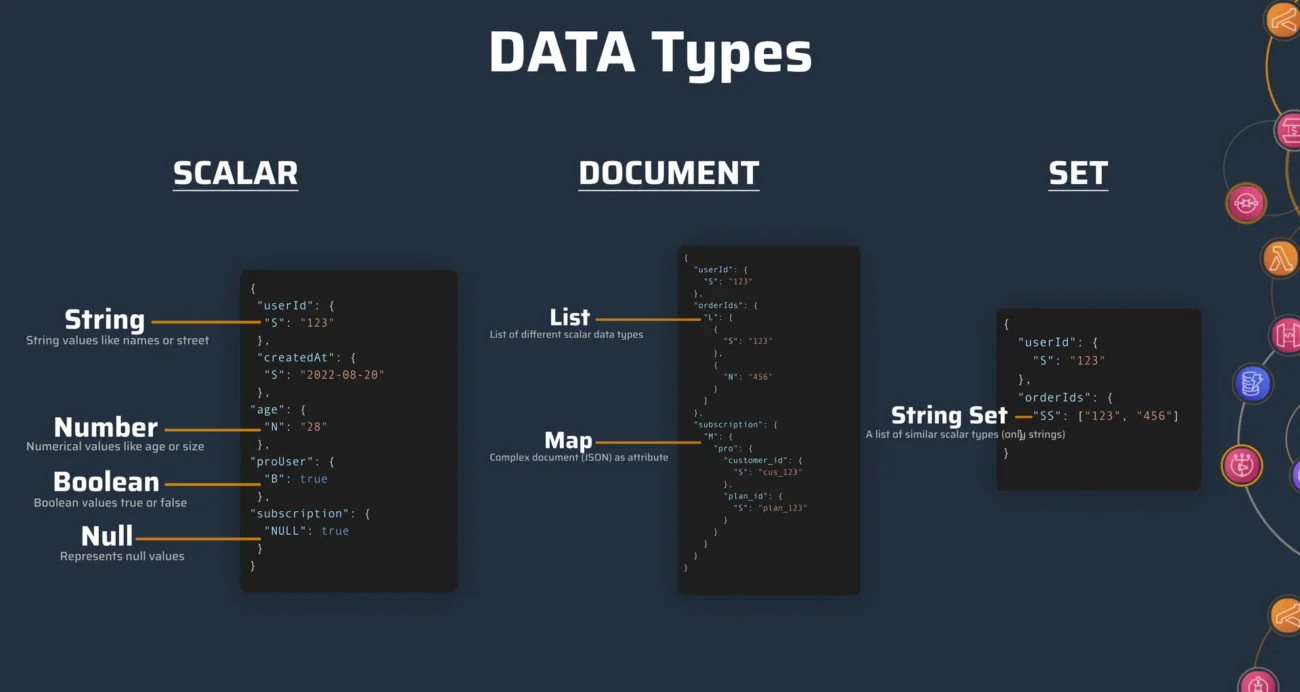
DynamoDB is a fully managed NoSQL database service offered by Amazon Web Services. Unlike relational databases such as MySQL, PostgreSQL, or Microsoft SQL Server, DynamoDB does not organize information into complex relational tables connected through joins. Instead, it uses key-value and document-based data models designed for speed and scalability.
The origins of DynamoDB trace back to Amazon’s internal Dynamo system. During the early 2000s, Amazon faced significant challenges managing massive traffic spikes, particularly during peak shopping seasons. Traditional database systems struggled to maintain performance under such demand.
To solve this problem, Amazon engineers developed Dynamo, a distributed storage system built around high availability, fault tolerance, and horizontal scalability. The success of that architecture eventually led AWS to launch DynamoDB as a public cloud service in 2012.
Today, dynamo data represents far more than simple data storage. It encompasses a complete ecosystem for handling operational workloads at scale.
Several characteristics distinguish DynamoDB from traditional databases:
- Fully managed infrastructure
- Automatic scaling
- Multi-region replication
- Built-in security controls
- Serverless operation
- Millisecond-level latency
- High durability and availability
One of the most important advantages is schema flexibility. Relational databases often require predefined structures that can become difficult to modify as applications evolve. DynamoDB allows developers to store different attributes within records while maintaining performance and scalability.
For modern development teams, this flexibility significantly accelerates innovation. New features can be introduced without requiring extensive schema migrations or database redesigns.
Another defining characteristic is operational simplicity. Teams no longer need to manage servers, install database software, perform upgrades, or handle complex failover configurations. AWS automates these responsibilities, allowing organizations to focus on delivering customer value.
As cloud-native architectures become increasingly common, the importance of dynamo data continues to expand across industries ranging from finance and healthcare to gaming, retail, and media streaming.
How Dynamo Data Moves So Fast
Performance is the defining characteristic of DynamoDB.
Many databases can scale. Many databases can store large amounts of information. What makes DynamoDB unique is its ability to maintain consistent single-digit millisecond response times even when processing enormous workloads.
This speed comes from several architectural decisions.
First, DynamoDB uses automatic partitioning. Rather than storing all information on a single server, data is distributed across multiple partitions. AWS automatically manages this process behind the scenes.
When a table grows larger or traffic increases, DynamoDB can split workloads across additional partitions without requiring manual intervention.
This architecture prevents bottlenecks that often occur in traditional databases.
Second, DynamoDB was designed specifically for predictable access patterns. Instead of relying heavily on expensive operations such as table joins, developers structure data around application queries.
This design philosophy dramatically reduces query complexity and improves response times.
Third, data replication plays a major role.
Every piece of dynamo data is automatically replicated across multiple availability zones within an AWS region. This redundancy improves durability while ensuring requests can be served efficiently.
Another major performance enhancement comes from DynamoDB Accelerator (DAX).
DAX is a fully managed in-memory cache designed specifically for DynamoDB workloads. Frequently accessed information can be served directly from memory, reducing read latency from milliseconds to microseconds.
For applications requiring extremely fast responses, such as gaming leaderboards or real-time recommendation engines, DAX can provide substantial performance gains.
The architecture also supports event-driven computing.
When data changes, DynamoDB Streams can immediately notify downstream services, eliminating the need for constant polling. This reduces latency while improving overall system efficiency.
Consider an online gaming platform with millions of active users.
Every player action may generate multiple database operations:
- Updating scores
- Saving progress
- Managing inventory
- Tracking achievements
- Synchronizing multiplayer sessions
Traditional databases can struggle under these workloads. DynamoDB’s distributed architecture allows these operations to occur simultaneously while maintaining consistent performance.
This combination of partitioning, caching, replication, and optimized data access explains why dynamo data powers many of the world’s most demanding applications.
What the Research Shows: Real-World Scale Numbers
Discussions about database performance often involve theoretical benchmarks. However, the true value of dynamo data becomes clear when examining real-world production environments.
DynamoDB has become one of AWS’s most widely deployed database services because it consistently delivers performance at extraordinary scale.
Organizations use DynamoDB to support workloads involving:
- Millions of active users
- Billions of records
- Global application deployments
- Continuous data streams
- Real-time transaction processing
One reason enterprises trust DynamoDB is its service-level reliability.
AWS designs DynamoDB to provide extremely high availability, helping organizations minimize downtime and maintain uninterrupted operations.
The database also supports automatic scaling based on workload demands.
Imagine an e-commerce platform preparing for a major sales event.
Traffic may increase tenfold or even one hundredfold within minutes. Traditional database systems often require manual provisioning and performance planning to accommodate such spikes.
DynamoDB automatically adjusts capacity, allowing applications to continue operating smoothly without infrastructure changes.
Research into cloud adoption trends shows that organizations increasingly prioritize elasticity over fixed capacity planning.
This shift aligns perfectly with DynamoDB’s architecture.
Another important factor is geographic distribution.
Global businesses require users in different regions to experience consistent performance. DynamoDB Global Tables replicate data across multiple AWS regions, enabling local reads and writes closer to end users.
This reduces latency while improving fault tolerance.
Industry studies also indicate that serverless technologies continue to gain momentum.
As organizations embrace microservices, event-driven architectures, and managed cloud services, databases like DynamoDB become foundational components of modern application stacks.
Perhaps the most important takeaway from adoption research is that DynamoDB scales across business sizes.
Startups use it to launch minimum viable products without infrastructure complexity.
Large enterprises use it to support mission-critical applications serving millions of customers.
Very few database technologies can effectively serve both extremes while maintaining consistent operational simplicity.
This ability to scale seamlessly from small projects to global systems is one of the primary reasons dynamo data remains highly relevant in 2026.
Dynamo Data in Practice: Who Actually Builds With This
The versatility of DynamoDB has made it a popular choice across multiple industries.
Organizations adopt dynamo data solutions because they need databases capable of handling real-time workloads, unpredictable traffic patterns, and global user bases.
One major sector is e-commerce.
Online retailers process product searches, shopping cart updates, inventory tracking, customer profiles, and payment workflows continuously. During major shopping events, transaction volumes can increase dramatically within short periods.
DynamoDB’s automatic scaling allows retailers to accommodate these surges without performance degradation.
Gaming represents another important use case.
Modern multiplayer games generate enormous volumes of player interactions. Every achievement, leaderboard update, inventory change, and matchmaking request creates database activity.
Because gaming experiences depend heavily on responsiveness, low latency is essential.
DynamoDB helps developers maintain smooth gameplay even during peak demand periods.
Streaming and media companies also benefit significantly.
Platforms delivering video, music, podcasts, or interactive content must manage user preferences, viewing history, recommendations, and session data in real time.
The database’s scalability supports large audiences while maintaining fast content delivery experiences.
Internet of Things (IoT) deployments create another compelling application.
Millions of connected devices continuously generate sensor readings, operational metrics, and telemetry information.
DynamoDB’s ability to ingest and process large volumes of data makes it suitable for IoT workloads across manufacturing, healthcare, logistics, and smart city initiatives.
Financial institutions increasingly leverage DynamoDB as well.
Banking applications require reliability, security, and availability. Built-in encryption, access controls, auditing capabilities, and compliance support help organizations meet regulatory requirements.
Healthcare organizations use DynamoDB to manage patient-facing applications, appointment systems, and operational workflows where uptime and scalability are critical.
The diversity of these use cases demonstrates a key reality:
DynamoDB is not limited to a single industry or application type. Instead, it serves as a foundational infrastructure component for organizations building modern, cloud-native systems.
DynamoDB Pricing Models at a Glance
Understanding pricing is essential when evaluating dynamo data solutions for real-world applications. One of DynamoDB’s biggest advantages is its flexible pricing structure, which allows organizations of all sizes to optimize costs based on usage patterns.
DynamoDB offers three primary pricing approaches:
| Pricing Model | Best For | Cost Behavior |
| On-Demand | Unpredictable traffic | Pay per request |
| Provisioned Capacity | Steady workloads | Fixed hourly rate |
| Reserved Capacity | Long-term predictable usage | Discounted commitment-based pricing |
The On-Demand model is particularly attractive for startups and applications with variable traffic. Developers only pay for the read and write requests actually consumed. This eliminates the need to forecast capacity requirements in advance.
Provisioned Capacity is often more economical for established applications with consistent traffic patterns. Organizations allocate specific read and write throughput levels and pay a predictable hourly rate.
Reserved Capacity provides the greatest savings for enterprises with stable, long-term workloads. By committing to capacity over an extended period, organizations can significantly reduce database costs.
Beyond request pricing, teams should also consider storage costs, backup storage, data transfer, and optional features such as DAX.
Cost optimization in DynamoDB is closely tied to good data modeling. Efficient access patterns reduce unnecessary reads and writes, which directly lowers operational expenses. Organizations that design their dynamo data architecture carefully often achieve both high performance and strong cost efficiency.
Dynamo Data Integration: How It Plugs Into the AWS Ecosystem
One of the strongest advantages of DynamoDB is how seamlessly it integrates with the broader AWS ecosystem.
Modern cloud applications rarely operate in isolation. They typically involve databases, compute services, analytics platforms, monitoring tools, machine learning systems, and event-processing pipelines. DynamoDB was designed to function as a central component within this larger architecture.
AWS Lambda integration is particularly important. DynamoDB Streams can automatically trigger Lambda functions whenever data changes occur. This enables fully event-driven architectures.
For example, when a customer places an order:
- The order is written to DynamoDB.
- A stream event is generated.
- Lambda processes the event.
- Inventory is updated.
- A confirmation email is sent.
- Analytics systems receive the transaction data.
All of this can happen within seconds without manual intervention.
DynamoDB also integrates closely with:
- Amazon Kinesis for real-time data streaming
- Amazon CloudWatch for performance monitoring
- AWS Glue for ETL workflows
- Amazon Athena for querying exported data
- Amazon Redshift for large-scale analytics
- Amazon SageMaker for machine learning workloads
These integrations allow organizations to build sophisticated data pipelines around dynamo data.
A retail company might store operational transactions in DynamoDB, stream changes through Kinesis, process them with Lambda, analyze trends in Redshift, and build predictive models in SageMaker—all within the AWS ecosystem.
AWS has also invested heavily in developer tooling. New data modeling tools help teams design efficient DynamoDB schemas based on application access patterns, reducing the learning curve for new adopters.
This ecosystem integration is a major reason why many organizations choose DynamoDB over standalone database alternatives.
Where Dynamo Data Has Limits
No database is perfect for every workload, and understanding DynamoDB’s limitations is essential for making informed architectural decisions.
The most significant limitation is related to query flexibility. DynamoDB performs best when access patterns are known in advance. Applications requiring highly dynamic, ad-hoc queries across large datasets may find relational databases or analytical systems more suitable.
Traditional SQL databases excel at complex joins, multi-table relationships, and flexible reporting queries. DynamoDB intentionally avoids many of these features to maximize scalability and performance.
Another important constraint is the item size limit. Individual items cannot exceed 400 KB. Applications dealing with large documents, media files, or extensive records often need complementary storage solutions such as Amazon S3.
Transactional operations also have limits:
- Maximum of 100 unique items per transaction
- Maximum transaction size of 4 MB
- Transactions are scoped to a single AWS region
For most applications these limits are reasonable, but highly complex transactional systems may require additional architectural planning.
Analytics is another area where DynamoDB is not typically used as the primary solution.
While operational queries perform exceptionally well, large-scale analytical workloads involving unpredictable query patterns are usually better served by data warehouses such as Redshift or query engines such as Athena.
Cost management can also become challenging if capacity planning is ignored. Applications generating extremely high read or write volumes without optimized access patterns may experience higher-than-expected costs.
The key takeaway is not that DynamoDB is limited, but that it is specialized. It is optimized for operational workloads requiring:
- High throughput
- Low latency
- Massive scalability
- High availability
- Predictable access patterns
When used for these scenarios, dynamo data delivers outstanding results.
The Bigger Picture: Why Dynamo Data Matters in 2026
The importance of dynamo data extends far beyond a single database service.
It represents a broader shift in how software is built, deployed, and operated.
Historically, organizations invested heavily in database administrators, hardware procurement, capacity planning, patch management, and disaster recovery infrastructure. Modern cloud-native development increasingly moves these responsibilities to managed service providers.
DynamoDB sits at the center of this transformation.
Developers can now launch globally scalable applications without managing database servers. This dramatically lowers operational complexity and accelerates innovation.
Several trends make DynamoDB especially relevant in 2026:
1. Growth of Serverless Computing
Serverless architectures continue to expand across industries. DynamoDB integrates naturally with serverless services such as Lambda, making it a foundational component of many modern applications.
2. Explosion of Real-Time Applications
Users increasingly expect instant responses. Whether interacting with AI tools, gaming platforms, financial apps, or social networks, low-latency data access is becoming a competitive necessity.
3. Global User Bases
Applications are no longer confined to single regions. Global Tables enable organizations to deliver consistent experiences across multiple geographic locations.
4. AI and Event-Driven Systems
Modern applications generate continuous streams of events and data. DynamoDB’s streaming capabilities make it well-suited for AI-powered and event-driven architectures.
5. Operational Simplicity
Businesses increasingly prefer managed services that reduce infrastructure overhead. DynamoDB allows teams to focus on product development rather than database administration.
Industry analysts consistently identify NoSQL databases as one of the fastest-growing segments of the cloud infrastructure market. DynamoDB remains one of the leading platforms in this category.
For organizations building modern digital products, understanding dynamo data is increasingly becoming a core architectural skill rather than a niche specialty.
FAQ
1. What is dynamo data in the context of AWS?
Dynamo data refers to information stored and managed within Amazon DynamoDB, AWS’s fully managed NoSQL database service designed for high-speed, high-scale applications.
2. How fast is DynamoDB really?
DynamoDB consistently delivers single-digit millisecond response times at virtually any scale. With DAX enabled, read latency can be reduced to microseconds for frequently accessed data.
3. Is DynamoDB suitable for small applications?
Yes. The On-Demand pricing model allows small applications to pay only for the capacity they actually use, making DynamoDB suitable for startups and MVPs.
4. What’s the biggest limitation of DynamoDB?
The biggest limitation is that data models must be designed around known access patterns. It is less suitable for complex ad-hoc queries and heavy relational workloads.
5. How does DynamoDB handle global applications?
DynamoDB Global Tables automatically replicate data across multiple AWS regions, enabling active-active multi-region deployments with low latency for users worldwide.
Does DynamoDB support ACID transactions?
Yes. DynamoDB supports ACID transactions for operations within a single AWS region, allowing applications to maintain data consistency across multiple items.
Can DynamoDB be used with Kubernetes applications?
Yes. Many Kubernetes-based applications use DynamoDB as an external managed database, reducing the need to operate database clusters inside Kubernetes.
Is DynamoDB secure enough for financial applications?
Yes. DynamoDB includes encryption, identity-based access control, auditing, and compliance capabilities that support many financial and regulated workloads.
How does DynamoDB scale during traffic spikes?
DynamoDB automatically adds capacity through its distributed architecture, allowing applications to handle sudden increases in traffic without manual scaling operations.
What is the difference between DynamoDB and a traditional SQL database?
DynamoDB is a NoSQL database optimized for scalability, availability, and low latency, while traditional SQL databases emphasize relational modeling, joins, and flexible querying.
Conclusion
Amazon DynamoDB has become one of the most important databases in modern cloud computing because it solves a problem that many organizations struggle with: delivering consistent performance at massive scale. The concept of dynamo data represents far more than simple storage—it represents a fully managed, globally distributed, high-performance data platform built for modern applications.
From e-commerce and gaming to IoT, finance, and AI-driven systems, DynamoDB enables organizations to scale rapidly without managing database infrastructure. While it is not the right solution for every workload, its strengths in low-latency operations, automatic scaling, and AWS ecosystem integration make it a foundational technology for cloud-native development in 2026 and beyond.
