Introduction
A door handle is one of the most frequently used parts of any home, office, or vehicle. Because it is used many times every day, it can eventually wear out or break unexpectedly. When a door handle snapped, it can quickly become frustrating and stressful, especially if the door is locked or difficult to open. Many people panic when this happens because they are unsure whether the problem is simple to fix or requires professional help.
A snapped door handle can happen for several reasons, including old age, poor-quality materials, excessive force, rust, or damaged internal components. In some situations, the handle may feel loose for weeks before breaking completely. In other cases, it may suddenly snap without warning. Whether the problem affects a bedroom door, front entrance, bathroom door, uPVC door, or car handle, understanding the cause is the first step toward fixing it properly.
This guide explains everything you need to know about a door handle snapped issue. You will learn the common causes, warning signs, immediate solutions, repair methods, repair costs, and ways to prevent future problems. The article also covers special situations involving uPVC and car door handles so readers can confidently handle the issue in any situation.
Meaning & Causes
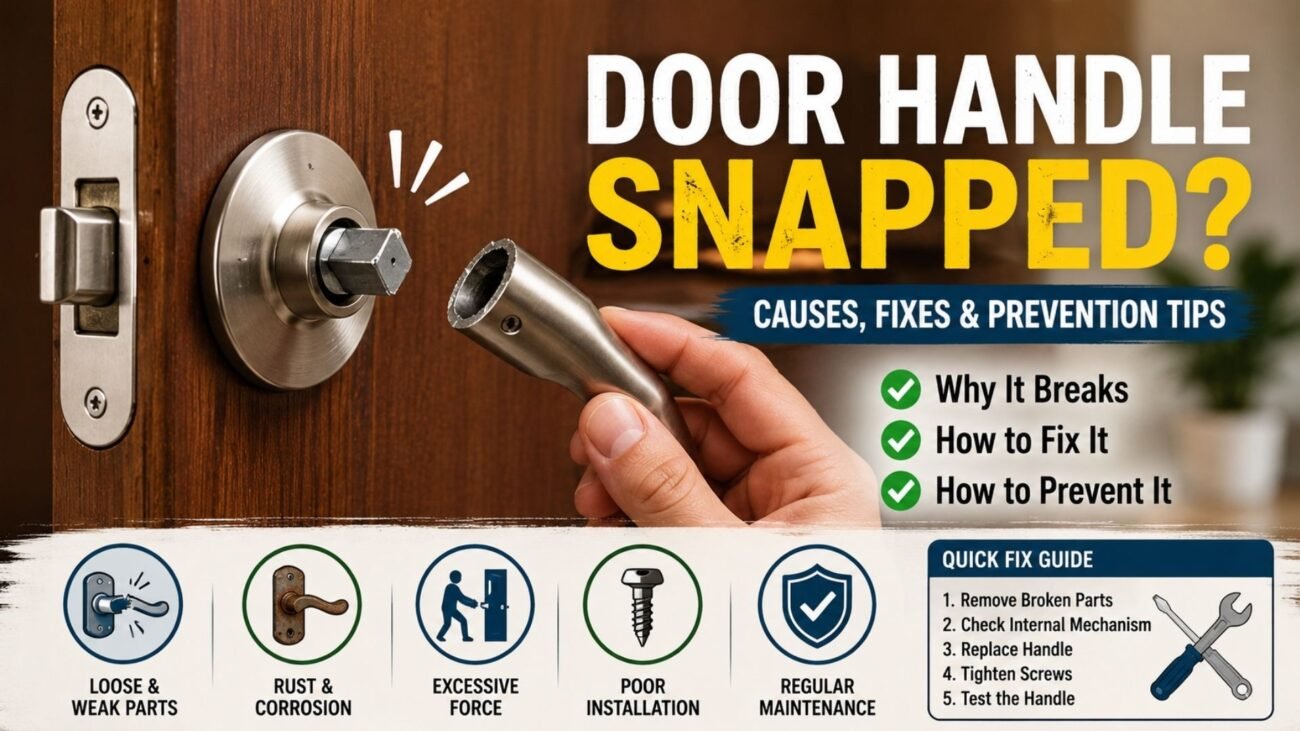
When people say a “door handle snapped,” they usually mean that the handle has broken away from its normal position or stopped functioning correctly. In many cases, the internal spindle, spring, or mounting mechanism breaks, causing the handle to become loose or completely detached. Sometimes only the outer lever snaps, while in other situations the entire locking mechanism fails.
One of the most common causes is regular wear and tear. Door handles are mechanical parts that move repeatedly throughout the day. Over time, constant pressure weakens the metal, screws, springs, and latch system. Cheap handles made from low-quality materials often fail much faster than strong stainless steel or brass handles.
Excessive force is another major reason a door handle snapped unexpectedly. Pulling or twisting the handle too hard can damage the internal mechanism. This commonly happens when doors become stuck because of humidity, swelling wood, or latch alignment issues. Children slamming doors or people forcing locked handles can also create unnecessary pressure.
Rust and corrosion are serious problems for outdoor handles or bathroom doors exposed to moisture. Rust weakens metal parts and causes the mechanism to become stiff. Once the internal parts become difficult to move, the handle experiences more stress and may eventually snap.
Incorrect installation also contributes to handle damage. Loose screws, poorly aligned latches, or badly fitted spindles can slowly weaken the system. In some cases, homeowners install replacement handles that do not properly match the door thickness or lock type, leading to early failure.
Temperature changes can also affect door handles. Metal expands and contracts during hot and cold weather, especially on exterior doors. Over time, this repeated movement can weaken the structure and cause cracks or internal damage.
Symptoms & Warning Signs
A snapped handle rarely happens without warning. In most situations, there are clear signs that the handle is becoming damaged. Recognizing these early symptoms can help homeowners fix the issue before the handle completely breaks.
One of the first warning signs is looseness. If the handle starts wobbling or moving more than usual, the screws or internal components may already be weakening. Some people ignore this issue for months until the handle finally breaks during regular use.
Another common sign is stiffness. If the handle becomes difficult to turn or requires extra force to open the door, the internal spring or latch may be failing. This extra pressure places stress on the handle and increases the chance of snapping.
Grinding, clicking, or scraping noises also indicate internal wear. Healthy door handles should move smoothly and quietly. Strange sounds usually mean that parts inside the mechanism are rubbing incorrectly or becoming damaged.
Visible cracks are another important warning sign. Small fractures around the base plate or lever can quickly spread under daily pressure. Once the crack becomes larger, the handle may suddenly snap while opening the door.
Sometimes the latch itself becomes stuck. When the latch does not retract properly, users naturally apply more pressure to the handle. This added force often causes the spindle or lever to break. In older doors, worn springs may prevent the handle from returning to its normal position after use.
The following table shows common warning signs and their possible causes:
| Warning Sign | Possible Cause |
| Loose handle | Worn screws or spindle |
| Stiff movement | Rust or damaged spring |
| Grinding sound | Internal friction |
| Cracked lever | Metal fatigue |
| Handle sticking | Latch misalignment |
| Door difficult to open | Broken internal mechanism |
Identifying these signs early can save money and prevent a complete lockout situation.
Immediate Solutions
When a door handle snapped, the first step is to remain calm and inspect the situation carefully. Many people make the mistake of forcing the door open, which can damage the lock, latch, or surrounding door frame even further.
If the door is unlocked, the solution may be simple. In many cases, the broken handle exposes the spindle inside the mechanism. Using pliers to carefully turn the spindle may allow the latch to retract and open the door safely. This temporary method often works until a proper repair can be completed.
For locked interior doors, checking for an emergency release hole can help. Bathroom and bedroom privacy locks often include a small opening that allows access using a thin tool or pin. This can help unlock the door without damaging the mechanism.
If the snapped handle involves an exterior door, homeowners should avoid aggressive force because it may compromise security. Instead, entering through another door and removing the damaged hardware from the inside is usually safer.
Applying lubricant can sometimes help if the latch mechanism is jammed. A small amount of lubricant reduces friction and may allow stuck parts to move again temporarily. However, this is only a short-term solution and does not repair broken internal components.
For car door handles, using the inside handle or key fob may provide access if the exterior handle snaps. Some modern vehicles also include manual emergency releases.
If the door cannot be opened safely, contacting a locksmith is often the best option. Professional locksmiths have tools designed to open damaged locks without causing unnecessary destruction.
Repair Guides
Repairing a broken handle depends on the extent of the damage. In many situations, homeowners can fix the issue themselves using basic tools and replacement parts. However, some complex locking systems require professional repair.
The repair process usually begins by removing the screws holding the handle in place. Once the handle is removed, the spindle and latch mechanism should be inspected carefully. Broken springs, cracked levers, or damaged spindles often need replacement.
If only the handle itself is damaged, installing a new handle may solve the problem quickly. Most replacement handles come with instructions and universal fittings for standard doors. Matching the size and lock type is important to ensure proper operation.
When the latch mechanism is also damaged, replacing the latch assembly may be necessary. This involves removing the latch plate from the edge of the door and installing a compatible replacement.
uPVC doors require additional care because they often use multipoint locking systems. Incorrect repairs may damage the gearbox or alignment. In such cases, professional assistance may be safer.
The average DIY repair can take between 20 minutes and one hour depending on the door type and complexity. People with limited experience should work slowly and avoid overtightening screws, as this can damage the new handle.
Professional locksmiths are recommended when:
- The door remains locked shut
- The lock mechanism is damaged
- The handle snapped inside the lock
- Security doors are involved
- Smart locks stop functioning
Repairing the issue quickly helps prevent additional stress on the door and improves home security.
Cost Analysis
The cost of repairing a snapped door handle varies depending on the door type, handle quality, and labor charges. Simple interior door repairs are usually affordable, while advanced locking systems can cost significantly more.
Basic interior handle replacements often cost between $15 and $50 for parts. Homeowners who perform the repair themselves can avoid labor charges completely. Front door handles and higher-security locks usually cost more because they use stronger materials and advanced locking mechanisms.
uPVC door repairs are often more expensive due to their multipoint locking systems. If the internal gearbox is damaged, repair costs can increase quickly. Car door handle repairs may also be costly because modern vehicle handles often include electronic components.
The table below shows average repair estimates:
| Door Type | Estimated Repair Cost |
| Interior Door | $15–$80 |
| Front Door | $50–$200 |
| uPVC Door | $80–$250 |
| Sliding Door | $40–$150 |
| Car Door Handle | $100–$400 |
Labor rates vary by location and emergency service timing. After-hours locksmith visits are usually more expensive than scheduled repairs.
Investing in a higher-quality replacement handle may reduce future repair costs. Durable materials such as stainless steel and brass typically last longer than cheap plastic or thin alloy handles.
Prevention Tips
Preventing future problems is much easier than dealing with emergency repairs. Regular maintenance can significantly extend the lifespan of a door handle and reduce the risk of failure.
One of the simplest prevention methods is tightening loose screws regularly. Small movements gradually weaken mounting points, so checking handles every few months helps maintain stability.
Lubricating the latch and internal mechanism also improves smooth movement. Dry or rusty parts create friction, forcing users to apply extra pressure that may eventually cause snapping.
Avoiding excessive force is equally important. Doors that stick or jam should be repaired immediately instead of being forced open repeatedly. Slamming doors also places unnecessary stress on the handle and latch system.
Choosing quality handles is another smart investment. Strong metal handles made from stainless steel or brass generally last much longer than low-cost alternatives. Weather-resistant finishes are especially useful for exterior doors exposed to moisture and temperature changes.
Regular inspection helps identify small cracks, rust spots, or stiffness before serious damage occurs. Addressing minor issues early can prevent expensive repairs later.
Special Cases (uPVC & Car Handles)
uPVC door handles are common in modern homes, but they often use more complicated locking systems than standard wooden doors. When a uPVC door handle snapped, the internal gearbox or multipoint lock may also be damaged. This can prevent the door from locking securely or opening properly.
These handles often fail because of alignment issues or excessive force when the door becomes difficult to close. Moisture and poor maintenance can also contribute to wear inside the locking system. Because of the complexity involved, many homeowners choose professional repair services for uPVC doors.
Car door handles present different challenges. Exterior car handles can snap due to cold weather, repeated pulling, or worn plastic components. In some vehicles, the handle breaks while the latch cable remains functional. In others, the entire opening mechanism fails.
Modern vehicles with keyless entry systems may require specialized repairs involving sensors or electronics. Temporary fixes may provide short-term access, but replacing the damaged handle is usually the safest long-term solution.
FAQ’s
Why does a door handle snap suddenly?
A handle may appear normal externally while internal springs or spindles weaken over time. Eventually, regular use causes the final break.
Can I repair a snapped handle without replacing it?
Minor issues such as loose screws can sometimes be repaired, but completely snapped handles usually require replacement.
How long does a typical door handle last?
A quality door handle can last 10 to 20 years depending on usage, maintenance, and environmental conditions.
Are smart door handles more durable?
Some smart handles use stronger materials, but electronic parts can create additional maintenance needs compared to traditional handles.
Is repairing a door handle difficult for beginners?
Basic interior handle replacements are usually beginner-friendly, but complex locks or uPVC systems may require professional help.
Conclusion
A door handle snapped problem can happen unexpectedly, but understanding the causes and warning signs makes the situation easier to manage. Wear and tear, rust, poor installation, and excessive force are some of the most common reasons handles fail. Acting quickly after noticing looseness, stiffness, or unusual sounds can prevent complete breakage and reduce repair costs.
Most standard door handles can be repaired or replaced with simple tools, while more advanced systems like uPVC and car handles may require professional assistance. Regular maintenance, lubrication, and investing in quality hardware can greatly improve durability and reliability. By following the tips and repair guidance in this article, homeowners can keep their doors secure, functional, and safe for many years
Also read:
