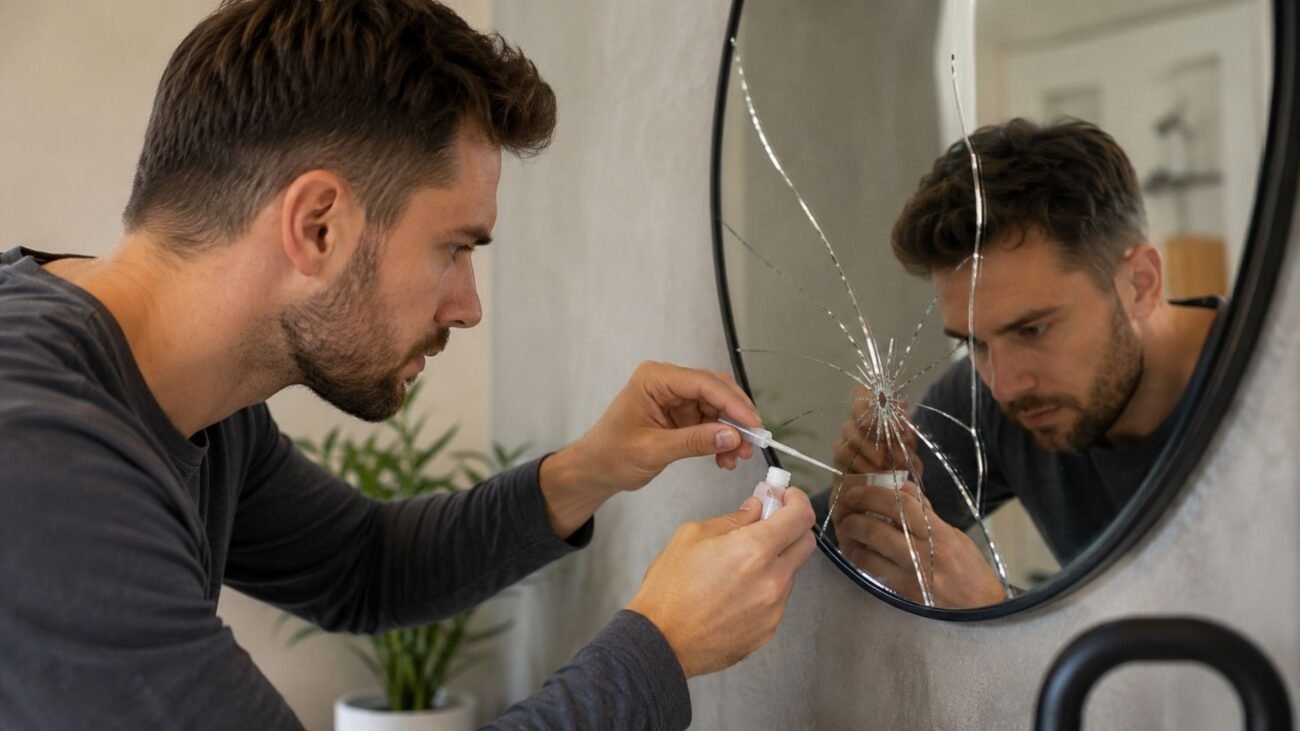
A cracked mirror can be frustrating, especially when the damage appears suddenly on a bathroom wall, bedroom dresser, or decorative piece. In some cases, the crack is small enough to repair, while in others, replacing the mirror may be the safer choice. Knowing the difference can help you save time, avoid injuries, and prevent the crack from spreading further.
Many people assume a cracked mirror is impossible to fix, but minor damage can sometimes be repaired or hidden using the right materials and techniques. The key is understanding the type of crack, preparing the surface correctly, and using safe repair methods designed for glass and mirrors.
This guide explains how to fix a cracked mirror step by step, what tools you need, when repairs are possible, and when replacement is the better option.
Understanding Mirror Cracks Before Repairing Them
Not every cracked mirror can be repaired successfully. Some cracks are cosmetic and small, while others weaken the structure of the glass.
Hairline cracks are usually the easiest to manage. These thin lines often appear because of minor impact, pressure, or temperature changes. If the backing of the mirror remains intact, repair may still be possible.
Spiderweb cracks are more serious. They spread outward from a central impact point and usually indicate deeper structural damage. Large wall mirrors with this type of cracking often require replacement for safety reasons.
Edge cracks happen around the sides or corners of a mirror. These may spread over time if the mirror is exposed to moisture, movement, or pressure.
Before starting any repair, inspect the mirror carefully. If pieces are loose or the glass feels unstable, avoid handling it without protection.
When You Should Repair a Cracked Mirror
Mirror repair works best for minor cosmetic damage. Small cracks that do not affect the strength of the glass are usually good candidates for repair.
You can often repair a mirror if:
- The crack is short and narrow
- The damaged area is near the edge
- The mirror is still securely mounted
- There are no loose shards of glass
- The reflection remains mostly clear
Decorative mirrors, compact mirrors, and framed mirrors are commonly repaired instead of replaced because the damage may not affect daily use.
Repairing a small crack early may also stop it from spreading further.
When Replacing the Mirror Is the Safer Choice
Some mirrors are too damaged to repair safely. Attempting to fix heavily cracked glass can increase the risk of breakage.
Replacement is usually recommended when:
- The mirror has multiple cracks
- Large sections are shattered
- The crack spreads across the center
- The mirror backing is peeling away
- Sharp fragments are separating from the surface
Bathroom mirrors exposed to moisture can also weaken over time after cracking. If the mirror is mounted on a wall and appears unstable, replacement is often the safest option.
Safety Precautions Before Handling Cracked Glass
Safety should always come first when working with broken or cracked mirrors. Even small cracks can create sharp edges that cause injuries.
Before beginning repairs:
- Wear thick protective gloves
- Use safety glasses to protect your eyes
- Keep children and pets away from the area
- Place a soft towel or blanket below the mirror if possible
- Handle the glass slowly and carefully
If the mirror is large or mounted high on a wall, consider removing it carefully before attempting repairs.
Tools and Materials Needed for Mirror Repair
The exact tools depend on the type of crack, but most small repairs require simple supplies.
Common materials include:
- Glass repair resin or clear epoxy
- Cotton cloths or microfiber towels
- Mild glass cleaner
- Plastic applicator
- Transparent adhesive tape
- Protective gloves
- Razor blade for smoothing excess resin
Using products specifically designed for glass repair generally produces cleaner results than household glue.
How to Prepare the Mirror for Repair
Preparation is important because dirt and moisture can prevent adhesives from bonding properly.
Start by cleaning the mirror gently with a soft cloth and glass cleaner. Remove fingerprints, dust, and loose particles from the cracked area.
Allow the mirror to dry completely before applying any repair material. Moisture trapped inside the crack can weaken the repair later.
If tiny glass fragments are sticking out, handle them carefully. Do not press on the cracked section because added pressure may widen the damage.
How to Fix a Small Crack in a Mirror
Small cracks can often be repaired using clear epoxy or a glass repair kit.
Begin by applying a small amount of resin directly into the crack. Use the applicator provided with the repair kit to spread the material evenly across the damaged line.
The goal is to fill the crack completely without trapping air bubbles inside.
After applying the resin:
- Let the adhesive settle into the crack
- Remove excess material carefully
- Allow the resin to cure according to product instructions
- Clean the surface gently after drying
Some minor cracks become far less visible after repair, although the mirror may not look completely new again.
Repairing Edge and Corner Cracks
Cracks around the edges often spread because these areas experience more stress.
To repair an edge crack:
- Apply clear epoxy carefully along the damaged section
- Avoid bending or moving the mirror during curing
- Reinforce the frame if it feels loose
- Keep moisture away from the repaired area
For bathroom mirrors, sealing edge cracks quickly can help reduce further damage caused by humidity.
Ways to Hide a Crack in a Mirror
Sometimes a crack cannot be fully repaired, but it can still be concealed for decorative purposes.
Common methods include:
- Adding a decorative frame
- Using mirror-safe stickers or designs
- Positioning lighting away from the crack
- Applying decorative edging around damaged corners
These solutions work best for small cosmetic flaws rather than structural damage.
Many homeowners use creative designs to make a damaged mirror less noticeable while extending its usable life.
Common Mistakes That Make Mirror Cracks Worse
One of the biggest mistakes is applying too much pressure during repair. Even gentle force can cause a thin crack to spread quickly.
Other common problems include:
- Using regular household glue
- Ignoring loose glass pieces
- Cleaning with harsh chemicals
- Moving the mirror before the adhesive cures
- Attempting to repair severely shattered glass
Taking your time during the repair process usually leads to better and safer results.
How to Prevent Mirror Cracks in the Future
While accidents cannot always be avoided, proper handling and installation reduce the chances of cracking.
To protect mirrors:
- Mount wall mirrors securely
- Avoid slamming nearby doors
- Keep mirrors away from strong impacts
- Prevent moisture buildup behind bathroom mirrors
- Store unused mirrors upright with padding
Temperature changes can also affect glass over time, especially in humid spaces.
Checking mounting hardware regularly may help prevent stress-related cracks.
Repair Cost vs Replacement Cost
Repairing a small crack is usually inexpensive. Most glass repair kits cost far less than replacing a large mirror.
However, replacement may provide better long-term value if:
- The mirror is heavily damaged
- The reflective backing is deteriorating
- The crack affects visibility significantly
- Safety becomes a concern
Large custom mirrors are generally more expensive to replace, which is why minor repairs are often worth trying first.
Final Thoughts
Learning how to fix a cracked mirror can help you extend the life of decorative or household mirrors while avoiding unnecessary replacement costs. Small cracks and edge damage are often manageable with careful repair methods and proper safety precautions.
Still, not every mirror should be repaired. If the glass is unstable, heavily shattered, or unsafe to handle, replacement is usually the better option.
Using the correct materials, handling the mirror gently, and repairing damage early can reduce the risk of the crack spreading further. With patience and proper care, many small mirror cracks can be improved enough to restore both appearance and functionality.
Also read:
