Introduction
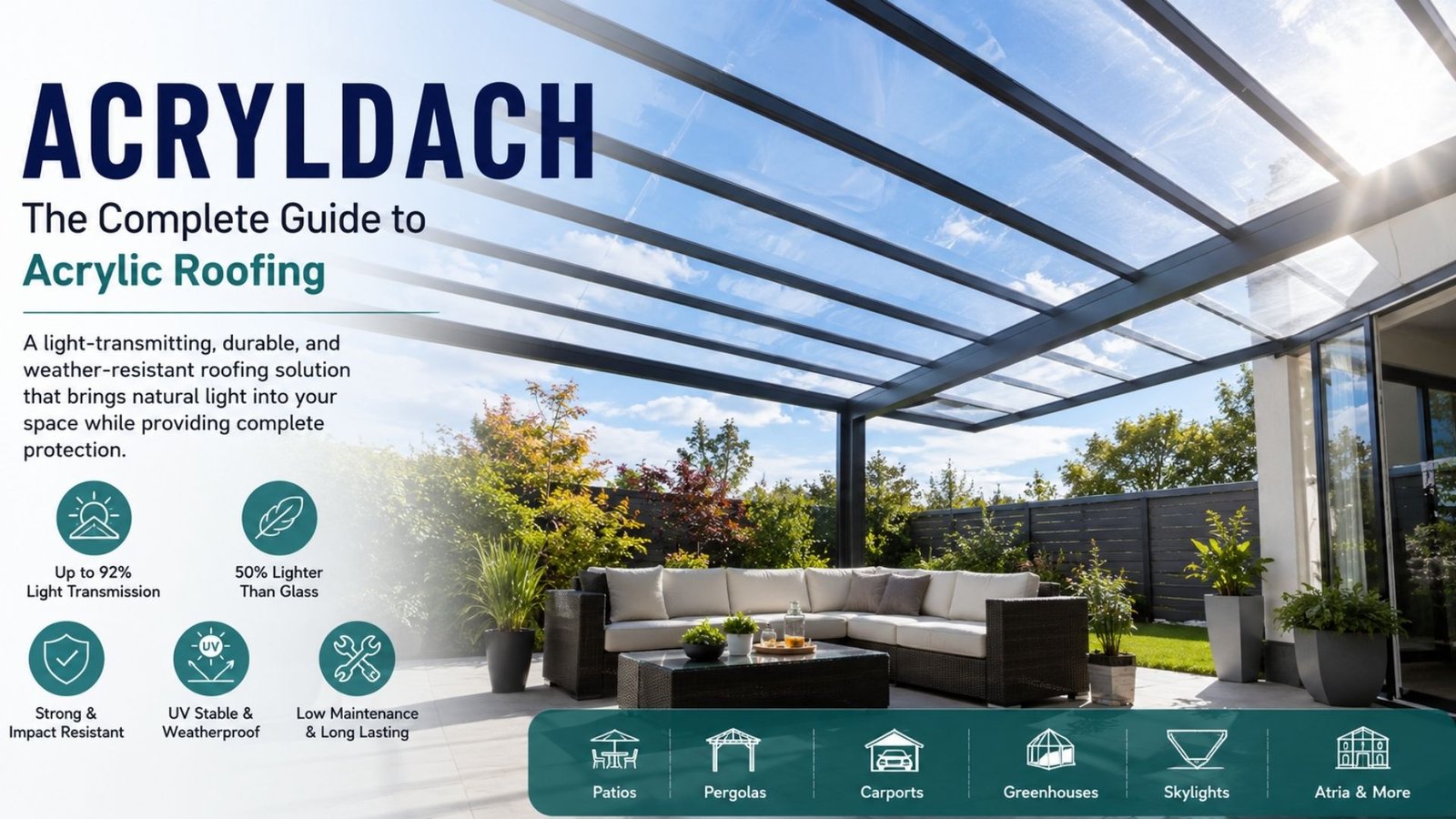
Modern architecture is no longer only about strong buildings and attractive designs. Today, people also want natural light, energy efficiency, and outdoor spaces that feel open and comfortable. This is where Acryldach has become increasingly popular. The term comes from German, where “Acryl” means acrylic and “Dach” means roof. In simple words, Acryldach refers to roofing systems made from acrylic materials, mainly PMMA sheets, designed to provide protection while still allowing sunlight to pass through.
Acryldach systems are widely used in patios, pergolas, skylights, conservatories, greenhouses, carports, and commercial buildings. They offer a balance between strength, transparency, and lightweight construction that many traditional roofing materials cannot provide. Unlike metal roofs that block sunlight completely, acrylic roofing creates bright and inviting spaces without sacrificing weather protection.
Another reason for the growing demand is its long lifespan and low maintenance requirements. Quality acrylic roofing can last for decades when installed correctly. It also gives architects and homeowners more flexibility in design because acrylic sheets are available in clear, frosted, tinted, and multiwall options.
This guide explains everything you need to know about Acryldach, including its materials, types, benefits, installation process, maintenance requirements, and costs.
Quick Reference: Acryldach at a Glance
Before exploring the details, it helps to understand the basic features that make Acryldach roofing popular around the world. Acrylic roofing is mainly manufactured using PMMA, a transparent thermoplastic known for excellent light transmission and weather resistance. Compared to traditional glass roofing, acrylic panels are lighter and easier to handle during installation.
One of the strongest advantages of Acryldach is its ability to let natural daylight enter indoor or semi-outdoor spaces. High-quality acrylic panels can transmit up to 92% of visible light, making them ideal for bright living areas, patios, and greenhouses. This reduces the need for artificial lighting during the day and creates a more open environment.
The material is also resistant to UV rays, moisture, rust, and corrosion. Unlike cheaper plastic roofing materials that become yellow or brittle over time, premium UV-coated acrylic sheets maintain their clarity for many years. In addition, acrylic roofs require very little maintenance, which makes them suitable for both residential and commercial applications.
| Feature | Details |
| Material | PMMA (Polymethyl Methacrylate) |
| Light Transmission | Up to 92% |
| Weight | About 50% lighter than glass |
| Lifespan | 20–30 years |
| Maintenance | Low |
| Common Uses | Patios, skylights, pergolas, greenhouses |
| UV Resistance | Excellent |
| Installation Requirement | Expansion allowance needed |
These features explain why many modern construction projects now prefer Acryldach systems over traditional roofing materials.
The Material Behind the Name: What Is PMMA?
The foundation of every Acryldach system is PMMA, short for Polymethyl Methacrylate. This transparent thermoplastic is commonly known by brand names such as Plexiglas, Perspex, and acrylic glass. PMMA has been used for decades in industries ranging from construction and transportation to medical equipment and aquariums.
What makes PMMA special is its combination of strength, transparency, and weather resistance. Standard glass is heavy and fragile, while acrylic offers similar clarity with much lower weight. Acrylic sheets are approximately half the weight of glass, which reduces the structural load on buildings and simplifies installation.
Another major advantage is optical clarity. PMMA allows more natural light to pass through compared to many other roofing materials. This makes spaces feel larger, brighter, and more welcoming. In homes, it creates comfortable outdoor living areas, while in commercial buildings it improves natural daylighting and reduces electricity consumption.
PMMA also performs well in outdoor conditions. It resists UV radiation, rain, humidity, and temperature changes without rusting or corroding. Quality acrylic roofing sheets remain clear for decades when properly manufactured and installed.
However, one important characteristic of PMMA is thermal expansion. Acrylic expands and contracts when temperatures change. This is completely normal, but installers must leave enough space around fixings and edges so the material can move naturally. If panels are fixed too tightly, cracks may develop over time.
Overall, PMMA is one of the most reliable transparent roofing materials available today, which explains the growing popularity of Acryldach systems in modern architecture.
Types of Acryldach Systems
Acryldach roofing is available in several forms, each designed for different building needs and weather conditions. Choosing the right type depends on factors such as insulation requirements, design preferences, and budget.
Solid Acrylic Sheets
Solid flat sheets are one of the most common options. These panels provide maximum transparency and are frequently used in patio covers, skylights, and pergolas. They create a clean and modern appearance while allowing large amounts of daylight into the space below.
Corrugated Acrylic Panels
Corrugated panels have a wave-like shape that increases strength and rigidity. Because of their design, they are commonly used for carports, sheds, warehouses, and industrial roofing. Corrugated acrylic is lightweight and easier to install over larger areas.
Multiwall and Twinwall Panels
Multiwall acrylic panels contain hollow internal chambers that improve insulation. These systems are highly popular in greenhouses, conservatories, and sunrooms because they help maintain indoor temperatures while still allowing light transmission. The diffused light created by multiwall panels also reduces glare and creates a more comfortable environment.
Tinted and Frosted Panels
Some Acryldach systems use tinted or frosted acrylic to improve privacy or reduce direct sunlight. Bronze, grey, blue, and opal finishes are common choices for residential patios and commercial spaces.
Liquid PMMA Roofing Systems
Liquid PMMA coatings are another form of acrylic roofing. Instead of solid panels, these systems use a waterproof acrylic membrane applied directly onto flat roofs and terraces. Once cured, the coating forms a seamless protective layer resistant to water and UV damage.
Each type of Acryldach offers unique advantages, allowing homeowners and architects to select a roofing solution that matches both functional and design requirements.
Key Benefits: Why People Choose Acryldach
One of the main reasons people choose Acryldach is its ability to combine weather protection with natural daylight. Traditional roofs often make outdoor spaces darker, but acrylic roofing keeps areas bright and visually open. This creates a more comfortable environment for patios, pergolas, and conservatories.
Another important advantage is weight reduction. Since acrylic sheets are much lighter than glass, they require less structural support. This lowers construction costs and simplifies transportation and installation. Lightweight materials are especially useful in renovations where existing structures may not support heavy roofing systems.
Durability is another strong benefit. High-quality acrylic roofing can resist rain, UV rays, wind, and changing temperatures for decades. Unlike metal roofs, acrylic does not rust or corrode. It also maintains its appearance longer than many cheaper plastic alternatives.
Design flexibility is another reason architects prefer Acryldach systems. Acrylic sheets can be curved, shaped, frosted, or tinted in various colors. This allows designers to create visually attractive roofs while maintaining functionality. Whether used in a modern residential patio or a large commercial atrium, acrylic roofing adapts easily to different architectural styles.
Low maintenance is also a major advantage. Acrylic roofs usually require only occasional cleaning with mild soap and water. There is no need for expensive treatments or complicated maintenance routines.
Finally, Acryldach supports energy efficiency. By increasing natural daylight inside buildings, it reduces dependence on artificial lighting during daytime hours. Multiwall systems also provide insulation benefits that can help lower heating and cooling costs in certain environments.
Acryldach vs. The Competition
When choosing roofing materials, comparing different options is essential. Acryldach competes mainly with glass, polycarbonate, and metal roofing systems.
| Feature | Acryldach | Glass | Polycarbonate | Metal |
| Light Transmission | Excellent | Excellent | Good | None |
| Weight | Low | Heavy | Very Low | Medium |
| UV Resistance | Excellent | Excellent | Moderate | High |
| Impact Resistance | Good | Low | Very High | High |
| Maintenance | Low | Moderate | Low | Moderate |
| Lifespan | 20–30 Years | 25+ Years | 10–15 Years | 30+ Years |
Compared to glass, Acryldach offers similar transparency but with significantly less weight. Glass provides excellent scratch resistance, but it is heavier, more expensive, and more fragile during installation.
Polycarbonate is another popular alternative because of its extremely high impact resistance. However, acrylic generally performs better in terms of optical clarity, scratch resistance, and long-term appearance. Polycarbonate tends to become cloudy or yellow faster when exposed to prolonged UV radiation.
Metal roofing remains highly durable and long-lasting, but it blocks all natural light. This makes it unsuitable for spaces where brightness and openness are important.
For homeowners seeking a balance between beauty, durability, and natural lighting, Acryldach often becomes the preferred choice.
Where Is It Actually Used?
Acryldach systems are used in both residential and commercial projects because of their versatility. One of the most common applications is patio roofing. Homeowners use acrylic roofs to create comfortable outdoor living spaces protected from rain while still enjoying sunlight.
Pergolas also benefit from acrylic roofing. Clear or tinted panels provide shelter without making the area feel closed or dark. In carports, corrugated acrylic panels protect vehicles while allowing daylight underneath.
Greenhouses are another major application. Multiwall acrylic panels help maintain stable temperatures and distribute light evenly across plants. This improves growing conditions and reduces extreme heat spots caused by direct sunlight.
Commercial buildings frequently use Acryldach systems in atriums, shopping centers, skylights, and covered walkways. Natural daylight improves the visual appeal of these spaces while helping businesses reduce energy consumption.
Industrial buildings also use acrylic rooflights to increase indoor daylighting in warehouses and factories. Public transport shelters, sports facilities, and swimming pool covers are additional examples where acrylic roofing performs effectively.
The wide range of applications shows how adaptable Acryldach systems have become in modern construction.
Installation: What You Actually Need to Know
Proper installation is one of the most important factors affecting the lifespan of an Acryldach roof. Even high-quality panels can fail if installed incorrectly.
The biggest issue installers must consider is thermal expansion. Acrylic naturally expands and contracts with temperature changes. To prevent cracking, mounting holes should always be slightly larger than the fasteners. Rubber washers and flexible fixings also help reduce stress on the panels.
Roof slope is another important factor. Acrylic roofing should have enough pitch to allow rainwater drainage. Flat installations can lead to water pooling, dirt accumulation, and long-term damage.
Choosing the correct panel thickness is equally important. Thin sheets may work for small patio roofs, but larger spans require thicker panels for strength and wind resistance. Local climate conditions and building regulations should always be considered before installation.
While some simple projects are suitable for DIY installation, larger or more complex roofing systems should be handled by professionals. Correct spacing, sealing, and fastening techniques are essential for long-term durability.
Maintenance: Simpler Than You Think
One reason many people prefer Acryldach is its low maintenance requirements. Unlike some roofing materials that require regular coatings or treatments, acrylic roofs remain functional with simple cleaning and periodic inspections.
Cleaning should be done using warm water, mild soap, and a soft cloth or sponge. Harsh chemicals, abrasive cleaners, and ammonia-based products should be avoided because they can damage the acrylic surface and reduce clarity over time.
Dust, leaves, and debris should be removed regularly to prevent water blockage and staining. In areas with heavy rainfall or nearby trees, occasional cleaning may be required more frequently.
It is also important to inspect fixings, seals, and support structures once or twice a year. Small issues such as loose fasteners or worn sealants can usually be repaired quickly before they develop into larger problems.
With proper care, a quality Acryldach roof can remain clear, attractive, and weather-resistant for decades.
Cost: What to Budget
The cost of Acryldach depends on factors such as panel type, thickness, UV protection, and installation complexity. Basic corrugated acrylic panels are more affordable, while premium cast acrylic or multiwall systems cost more.
For residential patio covers, material costs are usually moderate compared to glass roofing. However, professional installation can increase the total project budget depending on roof size and structural requirements.
Multiwall systems designed for conservatories or greenhouses generally cost more because of their insulation properties. Commercial skylights and architectural installations also require higher-quality materials and professional engineering.
Although cheaper acrylic panels are available, investing in UV-stabilized products is usually the better long-term decision. Low-quality sheets may discolor or become brittle within a few years, leading to replacement costs later.
Overall, Acryldach provides a good balance between performance, appearance, and long-term value.
FAQs
1. Is Acryldach suitable for snowy climates?
Yes, but the panel thickness and support structure must be designed for snow loads. Thicker acrylic sheets are recommended in colder regions.
2. Can acrylic roofing reduce electricity costs?
Yes. Since Acryldach allows more natural daylight into buildings, it can reduce the need for artificial lighting during daytime hours.
3. Does acrylic roofing make noise during rain?
Acrylic roofs can produce some rain noise, especially thinner corrugated panels, but multiwall systems help reduce sound significantly.
4. Can Acryldach panels be customized?
Yes. Acrylic panels are available in different colors, finishes, thicknesses, and shapes to match various architectural styles.
5. Is acrylic roofing environmentally friendly?
Many PMMA products are recyclable, and their long lifespan reduces material waste compared to lower-quality roofing alternatives.
Conclusion
Acryldach has become one of the most practical and visually appealing roofing solutions for modern homes and commercial buildings. Its ability to provide natural light while protecting against weather makes it ideal for patios, skylights, greenhouses, and many other applications. Compared to traditional materials, acrylic roofing offers lower weight, strong UV resistance, attractive design flexibility, and minimal maintenance requirements.
The key to long-term performance is choosing quality UV-stabilized panels and ensuring proper installation with thermal expansion allowances. When installed correctly, an Acryldach system can remain durable and visually clear for decades. For homeowners, architects, and businesses looking for a bright, modern, and reliable roofing option, Acryldach continues to be an excellent investment.
Also read:
