Introduction
Digital transformation has changed the way universities, businesses, and organizations interact with people. Modern users expect fast services, personalized experiences, and systems that are easy to use from anywhere. This shift has encouraged educational institutions to create platforms that go beyond traditional learning systems. One of the most talked-about platforms in this area is BinusCX.
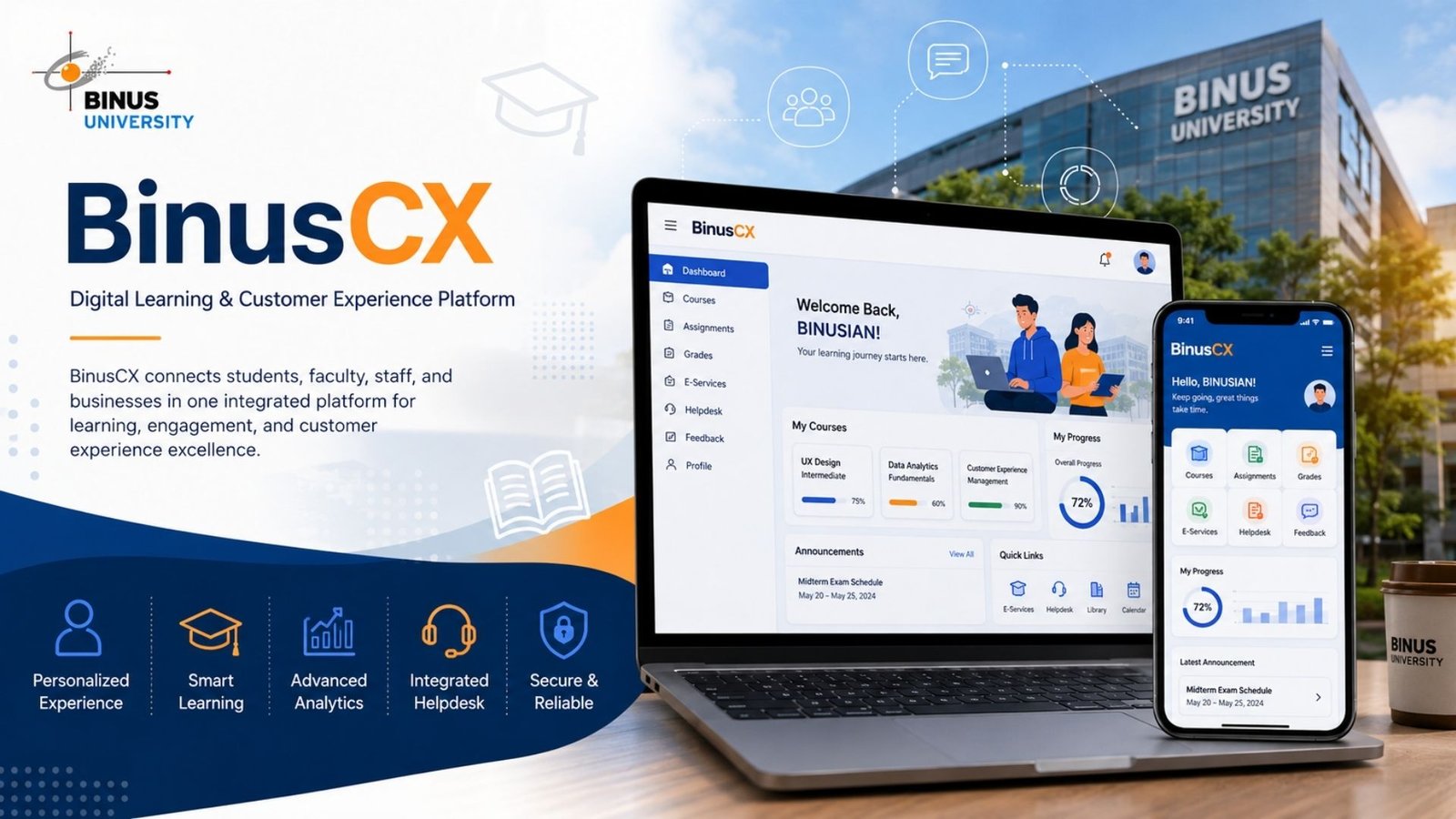
BinusCX is a modern digital ecosystem developed by BINUS University in Indonesia. It combines academic tools, customer experience principles, administrative services, and smart digital features into one connected platform. Instead of acting like a basic student portal, BinusCX creates a complete environment where students, lecturers, staff, and even businesses can interact smoothly.
The platform is designed to improve engagement, communication, and learning outcomes while also supporting enterprise customer experience strategies. From course management and helpdesk services to analytics dashboards and mobile access, BinusCX provides a flexible and user-friendly solution for today’s digital world.
As technology continues to shape education and business operations, platforms like BinusCX are becoming more important than ever. This article explains everything you need to know about BinusCX, including how it works, who can use it, its features, mobile capabilities, AI tools, security systems, and why it stands out from traditional learning management systems.
What Is BinusCX and How Does It Work?
BinusCX is an integrated digital platform created by BINUS University to support education, communication, customer experience management, and digital services. The term “CX” refers to customer experience, which means the platform is built around improving the way users interact with services and information.
At its core, BinusCX functions as both a learning platform and a customer experience ecosystem. It allows students to manage academic activities while also helping institutions and businesses improve engagement and communication. Unlike traditional systems that focus only on coursework or administration, BinusCX combines multiple digital functions into a single environment.
The platform works by connecting different services through one centralized dashboard. Once users log in, they gain access to tools related to academics, communication, administrative tasks, analytics, and support systems. Students can view schedules, submit assignments, track grades, and communicate with lecturers. Faculty members can organize classes, manage reports, and interact with students through integrated digital channels.
BinusCX also uses customer experience principles to improve usability. Instead of forcing users to navigate disconnected systems, it creates a more organized and responsive experience. Notifications, progress tracking, feedback systems, and support services are all designed to reduce frustration and improve efficiency.
Another important part of how BinusCX works is its cloud-based infrastructure. Since the system operates online, users can access it from multiple devices without relying on campus computers. This flexibility became especially valuable during the growth of remote learning and hybrid education.
The platform also supports real-time data synchronization. This means information updates instantly across the system. For example, when a lecturer uploads new learning materials or updates grades, students can immediately see those changes through their dashboard or mobile app.
In many ways, BinusCX reflects the future of digital education. It blends learning management, customer service, analytics, and communication into one ecosystem that supports both academic success and professional development.
Who Can Use BinusCX?
One of the reasons BinusCX has attracted attention is its flexibility. The platform is designed for multiple user groups rather than a single audience. While it was originally developed for BINUS University students and faculty members, its capabilities now extend into enterprise and organizational use.
Students are the primary users of BinusCX. Undergraduate, postgraduate, and online learners can use the system to access course materials, manage assignments, communicate with lecturers, and track academic progress. The platform helps students organize their academic life from one location instead of relying on several disconnected tools.
Lecturers and academic staff also benefit from BinusCX. Faculty members can upload materials, create assessments, manage attendance records, review student submissions, and provide feedback. The integrated environment reduces administrative workload and allows lecturers to focus more on teaching and mentoring.
Administrative teams use the platform for digital services and communication. Tasks such as enrollment management, transcript requests, announcements, and helpdesk operations can all be handled through the system. This reduces paperwork and improves operational efficiency across departments.
Another important user group is businesses and enterprise organizations. BinusCX includes customer experience management features that help organizations monitor feedback, improve engagement strategies, and train employees. Companies can use the platform for internal training programs, customer satisfaction analysis, and employee development initiatives.
The platform is also useful for remote learners and professionals who want flexible access to educational resources. Since BinusCX supports online and hybrid learning models, users can continue their studies or training programs without being physically present on campus.
International users may also interact with the platform through collaborative programs and enterprise partnerships. As BINUS University expands its digital initiatives across Southeast Asia, BinusCX is increasingly positioned as a regional technology and education solution.
This broad accessibility makes BinusCX different from many traditional university systems. Instead of focusing only on students, it creates value for educators, administrators, businesses, and professional learners at the same time.
Is BinusCX Available on Mobile Devices?
Mobile accessibility is one of the strongest advantages of BinusCX. In today’s fast-moving digital environment, users expect to access information instantly from smartphones and tablets. BinusCX addresses this need by offering a fully optimized mobile experience that allows users to stay connected wherever they are.
The platform is available on both Android and iOS devices. Users can download the application through the Google Play Store or Apple App Store. Once installed, the app provides access to most of the same features available on the desktop version.
For students, mobile access makes academic management more convenient. They can check schedules, view grades, receive announcements, access lecture materials, and submit assignments directly from their phones. This flexibility is especially helpful for students balancing education with internships, jobs, or personal responsibilities.
The mobile application also supports real-time notifications. Instead of constantly checking email or logging into a computer, users receive updates immediately when new announcements, assignments, or messages become available. This helps improve communication and reduces the chances of missing important information.
Lecturers and staff members can also use the mobile platform to manage tasks while away from their desks. They can review submissions, respond to inquiries, monitor schedules, and communicate with students in real time.
Another advantage of the mobile version is user-friendly navigation. BinusCX is designed with a modern interface that simplifies access to different services. Menus are organized clearly, making it easier for users to find the information they need.
The mobile app also supports digital collaboration. Through integrated communication features, students and lecturers can participate in discussions, respond to forum topics, and share resources from virtually anywhere.
As remote learning and hybrid work environments continue to grow, mobile-friendly platforms are becoming essential. BinusCX recognizes this trend and positions itself as a flexible digital companion rather than just a campus-based system.
The ability to learn, communicate, and manage tasks through a smartphone significantly improves convenience and accessibility. For many users, this mobile functionality is one of the main reasons BinusCX stands out in the competitive education technology market.
How Does BinusCX Support Students in Their Academic Journey?
BinusCX is designed to support students throughout every stage of their academic journey. Instead of focusing only on coursework, the platform creates a connected environment that helps students manage learning, communication, organization, and personal development.
One of the biggest ways BinusCX supports students is through centralized access to academic resources. Students no longer need to switch between multiple systems to find information. Lecture materials, assignments, grades, schedules, and announcements are all available through a single dashboard.
The platform also improves communication between students and lecturers. Through integrated messaging systems, forums, and discussion features, students can ask questions, receive feedback, and stay connected with instructors more efficiently.
Another major advantage is progress tracking. BinusCX allows students to monitor academic performance in real time. They can review completed tasks, track attendance, and identify areas that need improvement. This transparency helps students stay organized and motivated.
The platform’s adaptive learning features are also important. BinusCX can personalize learning experiences based on user activity and engagement. Students who need additional support can receive recommendations, while advanced learners can move through certain materials more quickly.
In addition to academics, BinusCX supports administrative tasks that are often time-consuming in traditional university systems. Students can request documents, manage profiles, and access e-services digitally instead of relying on manual paperwork.
Career development is another area where the platform adds value. Some BinusCX programs focus on practical skills, certifications, and industry preparation. Students can participate in modules designed to improve readiness for internships and professional careers.
Mental and emotional support also play a role in the modern student experience. By improving communication, reducing administrative frustration, and offering easier access to services, BinusCX helps create a more supportive academic environment.
The platform is especially valuable for online and hybrid learners who may not spend much time on campus. Through digital communication tools and mobile access, students can remain engaged regardless of location.
Overall, BinusCX supports students by creating a smoother, more connected, and more personalized learning experience. It combines technology, communication, and academic management in a way that aligns with the expectations of modern learners.
What Features Make BinusCX Different from Traditional LMS Platforms?
Many universities use Learning Management Systems (LMS) to organize coursework and online learning. However, BinusCX goes far beyond the capabilities of a traditional LMS. It combines education technology with customer experience management, creating a more interactive and intelligent digital environment.
One of the biggest differences is the focus on user experience. Traditional LMS platforms often prioritize functionality over usability. While they may provide access to learning materials and assignments, they can sometimes feel disconnected or difficult to navigate. BinusCX takes a more user-centered approach by creating a smoother and more personalized experience.
Another major difference is integration. Standard LMS platforms usually focus only on academics, while BinusCX integrates academic tools, customer support systems, analytics, administrative services, and communication features in one place.
The platform also includes advanced analytics tools. Traditional LMS systems generally provide limited reporting features, but BinusCX uses data analysis to monitor engagement, track performance, and improve user experiences.
Artificial intelligence is another distinguishing feature. BinusCX uses AI-powered insights to personalize learning pathways and analyze behavioral patterns. This allows the platform to adapt to user needs more effectively than many standard learning systems.
Enterprise support is also unique. Most LMS platforms are built only for schools or universities. BinusCX, however, includes tools for businesses and organizations interested in customer experience management, employee training, and engagement analysis.
Below is a comparison table that highlights the differences between BinusCX and traditional LMS platforms.
| Feature | BinusCX | Traditional LMS |
| Academic Management | Yes | Yes |
| Customer Experience Tools | Yes | Limited |
| AI-Powered Analytics | Yes | Basic |
| Mobile Optimization | Advanced | Varies |
| Integrated Helpdesk | Yes | Rare |
| Real-Time Feedback Systems | Yes | Limited |
| Enterprise Training Support | Yes | Rare |
| Personalized Learning Paths | Yes | Basic |
| Administrative E-Services | Yes | Limited |
| Multi-Channel Communication | Yes | Partial |
Another factor that separates BinusCX from traditional systems is scalability. The platform is designed to support large numbers of users while maintaining performance and accessibility.
BinusCX also reflects modern expectations about digital experiences. Users today expect systems to feel responsive, personalized, and connected. Traditional LMS platforms often struggle to deliver this level of engagement, while BinusCX is specifically designed around these principles.
Does BinusCX Use Artificial Intelligence and Analytics?
Artificial intelligence and analytics play a major role in the functionality of BinusCX. These technologies help the platform deliver smarter experiences, improve efficiency, and provide personalized support for users.
AI within BinusCX is primarily used to analyze user behavior and interaction patterns. By studying how students, lecturers, and organizations use the platform, the system can provide recommendations and identify potential challenges before they become serious problems.
For students, this means a more personalized learning experience. The platform can analyze academic performance, engagement levels, and participation data to recommend resources or identify areas that need improvement. Students who struggle with specific topics may receive additional support suggestions, while highly engaged learners can move through content more efficiently.
Analytics also help lecturers and administrators make better decisions. Faculty members can review class engagement data, assignment completion rates, and attendance patterns. This information allows educators to identify trends and adjust teaching strategies when necessary.
For businesses and enterprise users, analytics tools provide insights into customer behavior and engagement. Organizations can track customer satisfaction scores, analyze communication trends, and monitor service quality.
The platform also supports key customer experience metrics such as Net Promoter Score (NPS), Customer Satisfaction (CSAT), and Customer Effort Score (CES). These measurements help organizations understand how users feel about their services.
Predictive analytics is another valuable feature. Instead of reacting to problems after they happen, BinusCX can help institutions and businesses anticipate issues early. For example, declining engagement patterns may indicate that a student needs additional support or that a customer interaction requires attention.
Machine learning technologies improve these capabilities over time. As the platform processes more data, it becomes better at identifying trends and making accurate recommendations.
Artificial intelligence also contributes to automation within the system. Tasks such as notifications, reminders, support routing, and reporting can be managed more efficiently using smart automation tools.
Importantly, the platform uses AI to enhance human interaction rather than replace it. Lecturers still guide students, and organizations still make strategic decisions, but BinusCX provides intelligent support that improves accuracy and efficiency.
As AI technology continues to evolve, platforms like BinusCX are expected to become even more advanced. Future updates may include stronger predictive systems, virtual assistants, and more sophisticated personalization tools.
Can Businesses Use BinusCX for Customer Experience Management?
Although BinusCX was developed within an educational environment, its capabilities extend far beyond universities. Businesses and enterprise organizations can also use the platform to improve customer experience management, employee development, and digital communication strategies.
Customer experience has become one of the most important factors in modern business success. Companies no longer compete only through products or pricing. They also compete based on how customers feel when interacting with their services. BinusCX addresses this need by providing tools that help organizations improve engagement and satisfaction.
One of the platform’s most valuable business features is its feedback management system. Companies can gather real-time customer feedback and analyze responses through centralized dashboards. This allows organizations to identify strengths, weaknesses, and service gaps more efficiently.
BinusCX also supports multi-channel communication. Businesses can manage interactions across email, chat, social platforms, and other digital channels within one ecosystem. This creates a more consistent experience for customers.
Employee training is another important use case. Organizations can use BinusCX to deliver internal training programs, certifications, workshops, and onboarding modules. Since the platform was originally designed for education, it is well suited for structured learning and professional development.
The analytics tools within BinusCX help businesses understand customer behavior and engagement trends. Companies can track satisfaction metrics, monitor service quality, and evaluate employee performance using real-time data.
Another advantage is scalability. The platform supports large numbers of users, making it suitable for organizations with growing customer bases or distributed teams.
Businesses operating in industries such as retail, telecommunications, healthcare, hospitality, and financial services may particularly benefit from the platform’s customer experience capabilities.
BinusCX also supports collaboration between academia and industry. Companies can work with BINUS University on research projects, training initiatives, and customer experience studies.
This combination of education and enterprise functionality makes BinusCX different from many standalone CX tools. It provides both practical learning systems and advanced engagement technologies within one platform.
As customer expectations continue to rise, businesses increasingly need digital systems that improve communication, responsiveness, and service quality. BinusCX positions itself as a flexible solution capable of supporting these evolving demands.
How Secure Is BinusCX for Student and Enterprise Data?
Data security and privacy are critical concerns for any digital platform, especially one that handles academic records, customer information, and behavioral analytics. BinusCX recognizes the importance of trust and includes multiple security measures designed to protect both student and enterprise data.
One of the platform’s strongest security features is data encryption. Sensitive information transmitted through the system is encrypted to reduce the risk of unauthorized access. This applies to login credentials, academic records, customer analytics, and communication data.
BinusCX also follows recognized international standards for information security and privacy management. Compliance with frameworks such as GDPR and ISO 27001 demonstrates a commitment to responsible data handling practices.
Access control is another important part of the system. Users receive permissions based on their roles within the platform. Students, lecturers, administrators, and enterprise users only gain access to the information relevant to their responsibilities.
Cloud infrastructure also contributes to security and reliability. By using modern cloud-based technologies, BinusCX can provide secure backups, data recovery systems, and scalable protection against technical failures.
The platform regularly updates its security protocols to address emerging cyber threats. This includes monitoring systems, authentication processes, and software improvements designed to reduce vulnerabilities.
Privacy management is especially important because BinusCX uses analytics and AI tools. The platform is designed to handle user data responsibly while maintaining transparency about how information is used.
For students, secure data management ensures that grades, personal information, and academic records remain protected. For businesses, strong security standards help protect customer insights, internal communications, and operational data.
Another key factor is system reliability. Users depend on continuous access to educational and business tools, so the platform must maintain stable performance while protecting sensitive information.
As digital platforms become more advanced, security challenges continue to evolve. BinusCX addresses these challenges by combining technical protection measures with international compliance standards and ongoing system improvements.
Ultimately, strong security practices are essential for building user confidence. By prioritizing encryption, access control, compliance, and secure infrastructure, BinusCX creates a safer digital environment for both academic and enterprise users.
What Are the Main Features of the BinusCX Platform?
BinusCX includes a wide range of features designed to support education, communication, analytics, and customer experience management. These features work together to create a connected digital ecosystem that serves students, educators, administrators, and businesses.
One of the most important features is the personalized dashboard. Each user receives a customized interface based on their role and activities. Students can view schedules, assignments, grades, and announcements, while lecturers and staff access teaching tools, reports, and administrative tasks.
Another key feature is BINUSMAYA integration. This integration connects learning materials, coursework, assessments, and digital collaboration tools within the BinusCX environment.
The platform also offers advanced analytics dashboards. These dashboards provide insights into engagement patterns, academic performance, and customer experience metrics.
Integrated communication tools are another major strength. Users can interact through messaging systems, forums, announcements, and notifications. This improves collaboration and ensures information reaches users quickly.
The digital helpdesk system simplifies support services. Students and staff can submit tickets, ask questions, and receive assistance through a centralized support environment.
Administrative e-services are also important. Instead of relying on physical paperwork, users can handle tasks such as transcript requests, profile updates, and administrative submissions online.
Mobile accessibility ensures that users can access the platform from smartphones and tablets. This flexibility improves convenience and supports remote learning and work environments.
AI-powered personalization is another standout feature. The platform can analyze user behavior and adapt learning or engagement experiences accordingly.
BinusCX also supports certification and professional development programs. These programs help students and professionals gain practical skills that align with industry needs.
The system’s scalability allows it to support thousands of users simultaneously without compromising performance. This makes it suitable for large institutions and enterprise organizations.
Another important feature is real-time synchronization. Updates appear instantly across the system, ensuring users always have access to current information.
Together, these features create a platform that goes beyond traditional learning systems. BinusCX combines education technology, customer experience management, analytics, and digital administration into one integrated solution.
How Can You Access and Get Started with BinusCX?
Getting started with BinusCX is relatively simple for both academic and enterprise users. The platform is designed to provide easy access while maintaining secure login procedures and organized navigation.
For BINUS University students and staff, access typically begins through official university credentials. Users log in using their BINUS email accounts and passwords. Once authenticated, they can access the personalized dashboard and connected services.
The platform can be accessed through a web browser, making it compatible with laptops, desktop computers, and tablets. Users simply visit the official BINUS portal to sign in.
Mobile access is also available through Android and iOS applications. Downloading the app provides greater flexibility for users who prefer managing tasks on smartphones.
After logging in, users are introduced to a dashboard that organizes information into categories such as academics, communication, administrative services, and support systems.
Students can begin by reviewing course schedules, announcements, and assignments. Lecturers may focus on class management tools, grading systems, and communication channels.
Enterprise users may receive customized access depending on the services their organization uses. Business-focused modules often include analytics dashboards, training systems, and customer experience management tools.
The platform is designed with user-friendly navigation to reduce confusion for first-time users. Menus, notifications, and task management tools are organized clearly to improve accessibility.
New users may also receive onboarding guidance or tutorials explaining how to use major features. This helps reduce the learning curve and improves confidence when navigating the platform.
Since BinusCX operates online, users should maintain stable internet connections for the best experience. However, the platform’s mobile optimization and cloud infrastructure help maintain accessibility across different environments.
Support services are available through the integrated helpdesk system. Users experiencing technical issues or login problems can contact support teams directly within the platform.
Overall, accessing BinusCX is designed to be straightforward and convenient. The platform focuses on creating a smooth onboarding experience while ensuring users can quickly begin using its academic, communication, and customer experience tools.
The Growing Importance of Digital Learning and Customer Experience Platforms
The rise of platforms like BinusCX reflects larger changes happening in education and business worldwide. Digital transformation is no longer optional. Universities, companies, and organizations must now adapt to environments where users expect flexibility, personalization, and instant access to information.
Traditional systems often separate learning, communication, and support services into disconnected tools. This can create frustration, reduce engagement, and slow productivity. Modern platforms such as BinusCX solve this problem by bringing multiple services into one ecosystem.
In education, students increasingly expect experiences similar to the digital services they use every day. They want mobile access, real-time communication, personalized recommendations, and simple navigation. Universities that fail to provide these experiences may struggle to keep students engaged.
At the same time, businesses face growing pressure to improve customer satisfaction and digital engagement. Customer experience now plays a major role in brand loyalty and business growth. Platforms that combine analytics, communication tools, and feedback systems help organizations respond more effectively to customer needs.
BinusCX stands out because it addresses both educational and enterprise requirements. It reflects a broader trend where universities are becoming technology innovators rather than simply academic institutions.
Another important factor is remote accessibility. Hybrid learning and remote work have permanently changed expectations about digital access. Users now need systems that work efficiently across devices and locations.
Artificial intelligence and data analytics are also shaping the future of these platforms. Personalized experiences, predictive insights, and automation are becoming standard features rather than optional extras.
As Southeast Asia’s digital economy continues to grow, platforms like BinusCX are likely to play an even bigger role in connecting education, technology, and business innovation.
The success of systems like BinusCX demonstrates that the future of education and customer engagement depends on flexibility, integration, and user-centered design.
Future Developments and Expansion Plans for BinusCX
BinusCX continues to evolve as digital technology advances. The platform’s future roadmap suggests that BINUS University plans to expand both its educational capabilities and enterprise solutions over the coming years.
One major area of development is artificial intelligence. Future AI upgrades are expected to provide even stronger personalization features, predictive analytics, and smarter automation systems. These improvements could help students receive more customized learning experiences while enabling businesses to improve customer engagement strategies.
Virtual reality and augmented reality are also being explored. These technologies may eventually support immersive learning environments, interactive simulations, and advanced training experiences.
Another likely development is regional expansion across Southeast Asia. As demand for digital learning and customer experience solutions increases, BinusCX may become more widely adopted beyond Indonesia.
Certification programs are also expected to grow. BINUS University has shown interest in developing professional certifications related to customer experience, digital transformation, leadership, and business innovation.
Cloud infrastructure improvements may further increase scalability and system performance. This would allow the platform to support larger numbers of users while maintaining speed and reliability.
Another possible direction is blockchain-based credential verification. Digital certificates verified through blockchain technology could improve trust and simplify credential sharing.
Enhanced collaboration between universities and businesses may also become more common. BinusCX provides a strong foundation for partnerships involving research, training, internships, and workforce development.
Security improvements will likely continue as well. As cyber threats become more advanced, platforms handling educational and enterprise data must continuously strengthen their protection measures.
The future of BinusCX reflects broader global trends in education technology and customer experience management. Institutions and organizations increasingly need platforms that are flexible, intelligent, and capable of supporting digital-first environments.
If current development trends continue, BinusCX may become one of the leading examples of how education platforms can evolve into broader digital ecosystems that serve both academic and business communities.
FAQs About BinusCX
1. Is BinusCX only available for BINUS University students?
No, BinusCX is not limited to BINUS University students. While students and faculty are primary users, businesses and enterprise organizations can also use the platform for customer experience management and employee training.
2. Can BinusCX support online learning?
Yes, BinusCX fully supports online and hybrid learning environments. Students can access lectures, assignments, discussion forums, and communication tools remotely.
3. Does BinusCX offer certification programs?
Yes, BinusCX supports certification and professional development programs. These programs are designed to improve practical skills and career readiness.
4. What devices can be used to access BinusCX?
Users can access BinusCX through desktop computers, laptops, tablets, and smartphones. The platform is available through web browsers and mobile applications for Android and iOS.
5. Why is BinusCX considered different from a traditional university portal?
BinusCX goes beyond standard academic management by combining learning systems, customer experience tools, AI analytics, communication features, and enterprise support into one platform.
Conclusion
BinusCX represents a modern approach to digital education and customer experience management. Instead of functioning as a simple learning management system, it creates a connected ecosystem where students, educators, administrators, and businesses can interact more effectively.
Through features such as mobile accessibility, AI-powered analytics, integrated communication tools, personalized learning experiences, and enterprise customer experience management, BinusCX demonstrates how technology can improve both education and business operations.
The platform’s focus on user experience, security, flexibility, and innovation positions it as an important example of the future of digital transformation in Southeast Asia and beyond. As technology continues to evolve, BinusCX is likely to expand even further, offering smarter, more connected, and more personalized solutions for modern users.
Whether you are a student seeking a better academic experience or a business looking to improve customer engagement, BinusCX offers a powerful and forward-thinking digital solution.
Also read:
