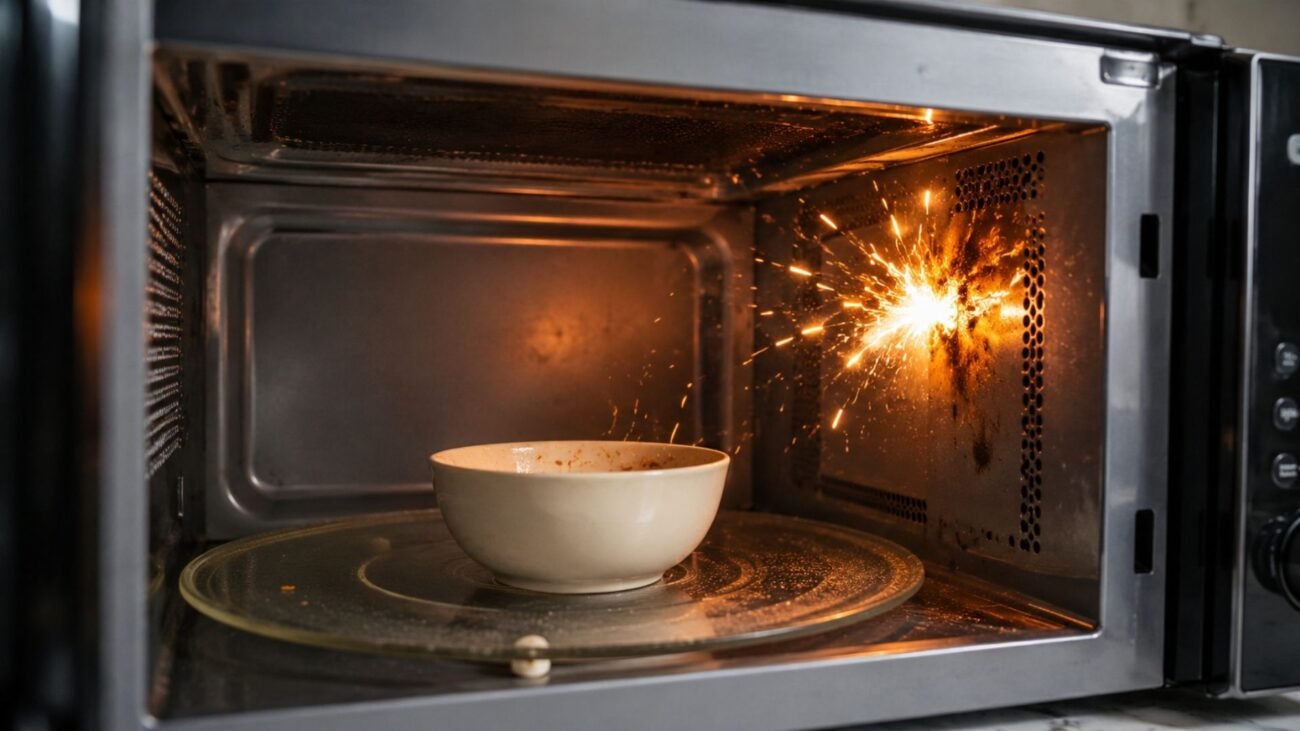
Microwave sparking is a common household problem that can quickly become dangerous if ignored. Many people notice bright flashes, popping sounds, or a burning smell while heating food and wonder whether the appliance is still safe to use. In some cases, the issue is caused by a simple mistake, such as placing metal inside the microwave. However, sparking can also point to damaged internal parts, grease buildup, or electrical problems that require immediate attention.
A microwave works by producing electromagnetic waves that heat food. When these waves react with metal, burnt food particles, or damaged surfaces, they can create sparks or electrical arcing. While small sparks may seem harmless at first, repeated sparking can damage the appliance and increase the risk of fire.
Understanding the causes of microwave sparking helps homeowners react quickly and avoid expensive repairs. This guide explains why microwaves spark, how to fix common issues, ways to prevent future problems, and when it is safer to replace the appliance entirely.
What Is Microwave Sparking?
Microwave sparking refers to visible flashes of electricity that appear inside the appliance while it is running. These sparks are usually caused by electrical arcing, which happens when microwave energy jumps between metal surfaces or damaged interior areas. Unlike the normal humming sound that most microwaves produce, sparking is often accompanied by crackling noises, smoke, or a burning smell.
Microwaves are designed to safely heat food using electromagnetic waves. These waves bounce around the cooking chamber and are absorbed by food molecules. Problems begin when the waves hit materials that reflect energy instead of absorbing it. Metal is the most common cause because it reflects microwave energy and creates concentrated electrical charges that lead to sparks.
Not every unusual sound means the microwave is dangerous. Some models naturally make soft clicking or humming noises during operation. However, bright flashes or loud popping sounds should never be ignored. In some situations, microwave sparking is minor and easy to fix. For example, removing a metal spoon or cleaning burnt food residue may solve the problem immediately. In more serious cases, sparking may indicate damaged internal components that require professional repair.
Why Is My Microwave Sparking?
There are several possible reasons for microwave sparking, and identifying the exact cause is important before attempting any repair. One of the most common causes is metal objects inside the appliance. Aluminum foil, forks, stainless steel containers, and even plates with metallic trim can create electrical arcing. Small hidden metal edges are enough to trigger sparks during heating.
Another common issue is a damaged waveguide cover. The waveguide cover is a small panel inside the microwave that protects sensitive internal components from food splatter and grease. When grease builds up or food burns onto the cover, it may begin to spark. Burn marks, discoloration, or cracking are clear signs that the cover should be replaced.
Burnt food particles are also a major reason for microwave sparking. Over time, food residue sticks to the microwave walls and carbonizes. These burnt particles conduct electricity and create small sparks during use. Regular cleaning helps prevent this issue and keeps the appliance operating safely.
Some microwaves include metal racks, especially convection models. If these racks are installed incorrectly or damaged, sparking may occur near the sides of the appliance. Internal electrical failures can also be responsible. A faulty magnetron, diode, or capacitor may produce sparks and unusual noises. In addition, chipped interior paint exposes metal beneath the surface, increasing the risk of electrical arcing and rust formation.
Common Signs of Microwave Sparking
Microwave sparking usually comes with clear warning signs that should not be ignored. The most obvious sign is bright flashes of light inside the cooking chamber. These flashes may appear near the walls, waveguide cover, or around metal objects.
Many users also hear crackling or popping sounds while the microwave is operating. These noises are often caused by electrical arcing. In some situations, the microwave may produce a strong burning smell or even smoke. This is especially common when food residue or grease is burning inside the appliance.
Another sign is uneven heating. Food may remain cold in some areas while becoming extremely hot in others. This can indicate internal component damage or problems with the microwave’s energy distribution. Sparks that repeatedly appear in the same location are also a warning sign of damaged paint, rust, or a faulty waveguide cover.
If any of these symptoms continue after removing metal objects and cleaning the interior, the microwave should be inspected carefully before further use.
Is Microwave Sparking Dangerous?
Microwave sparking can be dangerous because it increases the risk of electrical damage and fire hazards. Small sparks may not immediately destroy the appliance, but repeated electrical arcing can damage important internal components. In severe cases, sparking can burn the microwave walls or create smoke inside the kitchen.
One of the biggest dangers is fire. Grease buildup and food residue can ignite when exposed to repeated sparks. Sparks may also damage the magnetron, which is the component responsible for generating microwave energy. Replacing a damaged magnetron is often expensive and may cost nearly as much as buying a new microwave.
There are also electrical safety concerns. A damaged microwave may continue to operate incorrectly even after the sparking stops. This can increase the risk of shock or further internal damage. If the microwave produces smoke, strong burning odors, or sparks repeatedly, it should be unplugged immediately.
Homeowners should stop using the appliance if they notice cracked interior paint, exposed metal, or damaged electrical parts. Professional repair is often the safest option when sparking continues despite cleaning and removing possible causes.
What To Do Immediately If Your Microwave Sparks
If your microwave sparks, the first step is to turn it off immediately. Stopping the appliance prevents further electrical arcing and reduces the chance of fire. After turning it off, unplug the microwave from the power outlet to avoid electrical hazards while inspecting it.
Carefully check the interior for obvious causes. Remove any metal utensils, foil, twist ties, or dishes with metallic decoration. Look closely at the walls and ceiling for burnt spots, chipped paint, or signs of rust. The waveguide cover should also be inspected for burns or grease buildup.
Cleaning the microwave is an important next step. Food splatters and grease can create electrical arcing, so wipe down all interior surfaces using a damp cloth and mild detergent. Avoid harsh chemicals because they may damage the protective coating inside the microwave.
Once the appliance is clean and dry, test it carefully by heating a cup of water for a short time. If sparking continues, stop using the microwave and consider professional repair. Persistent sparking often means there is an internal electrical issue that requires expert attention.
Microwave Sparking but No Metal Inside – Why?
Many people become confused when microwave sparking occurs even though no metal is visible inside. In these situations, hidden causes are usually responsible. Some dishes contain metallic trim that is difficult to notice. Even tiny decorative lines around plates or cups can create sparks.
Damaged enamel coating is another possible reason. When the protective interior coating chips away, the exposed metal underneath reacts with microwave energy and creates electrical arcing. Rust formation can make the problem even worse over time.
Grease buildup around the waveguide cover is another hidden cause. The grease absorbs microwave energy and may begin to burn, creating sparks and smoke. Aging microwaves are also more likely to develop internal electrical faults. Worn-out magnetrons, damaged diodes, or faulty capacitors can cause sparking without any visible metal present.
If a microwave sparks repeatedly without an obvious cause, it is important to stop using it until the appliance has been inspected properly.
How To Fix a Sparking Microwave
Fixing microwave sparking depends on the exact cause of the issue. Start by removing any metal objects and replacing unsafe cookware with microwave-safe glass or ceramic containers. Cleaning the interior thoroughly often solves problems caused by food residue or grease buildup.
If the waveguide cover is burned or damaged, replacing it is usually simple and inexpensive. Many covers can be removed with a screwdriver and replaced using the microwave model number. Interior paint damage should also be repaired using microwave-safe paint to cover exposed metal areas.
Some problems involve internal electrical components such as the magnetron, diode, or capacitor. These parts should only be repaired by qualified technicians because microwaves store dangerous electrical charges even when unplugged.
The table below shows common microwave repair costs:
| Repair Type | Estimated Cost |
| Waveguide Cover Replacement | Low |
| Interior Repainting | Moderate |
| Diode Repair | Moderate |
| Magnetron Replacement | High |
| Full Microwave Replacement | Varies |
If repair costs become too high, replacing the microwave may be the better long-term option.
How To Prevent Microwave Sparking
Preventing microwave sparking starts with proper daily use and regular maintenance. Avoid placing metal containers, aluminum foil, or utensils inside the appliance unless the manufacturer specifically allows it. Always use microwave-safe materials such as glass, ceramic, or BPA-free plastic.
Cleaning the microwave regularly is equally important. Food splatters and grease buildup increase the risk of electrical arcing. Wiping down the interior every week helps prevent burnt residue from forming.
Covering food while heating can reduce splatter and keep the microwave cleaner. It is also helpful to inspect the interior regularly for chipped paint, rust spots, or damaged components. Catching these problems early can prevent more serious damage later.
Proper reheating habits also improve safety. Avoid overheating foods that are known to spark, such as grapes or foods wrapped in foil packaging. Following manufacturer instructions and maintaining the appliance carefully can greatly reduce the risk of microwave sparking.
Microwave Sparking FAQs
Can a microwave spark because of old age?
Yes, aging microwaves may develop worn-out electrical components or damaged interior coatings that increase the risk of sparking.
Why do grapes spark in a microwave?
Grapes contain minerals and moisture that can create plasma and electrical arcing when heated closely together.
Can a cracked microwave door cause sparking?
A damaged door may affect the microwave’s ability to contain energy safely and should be inspected immediately.
Is it safe to repaint the inside of a microwave?
Yes, but only microwave-safe paint designed for appliance interiors should be used.
How long does a microwave usually last?
Most microwaves last between 7 and 10 years with proper maintenance and careful use.
Conclusion
Microwave sparking is a warning sign that should never be ignored. While simple issues like metal objects or food residue are common causes, repeated sparking may point to damaged components or interior surfaces. Quick action can prevent fire hazards, protect the appliance, and improve kitchen safety.
Regular cleaning, proper cookware, and routine inspections are the best ways to avoid microwave sparking. If the problem continues after basic troubleshooting, professional repair may be necessary. In some cases, replacing an old or heavily damaged microwave is the safest and most cost-effective choice. By understanding the causes and solutions, homeowners can use their microwaves more safely and confidently
Also read:
